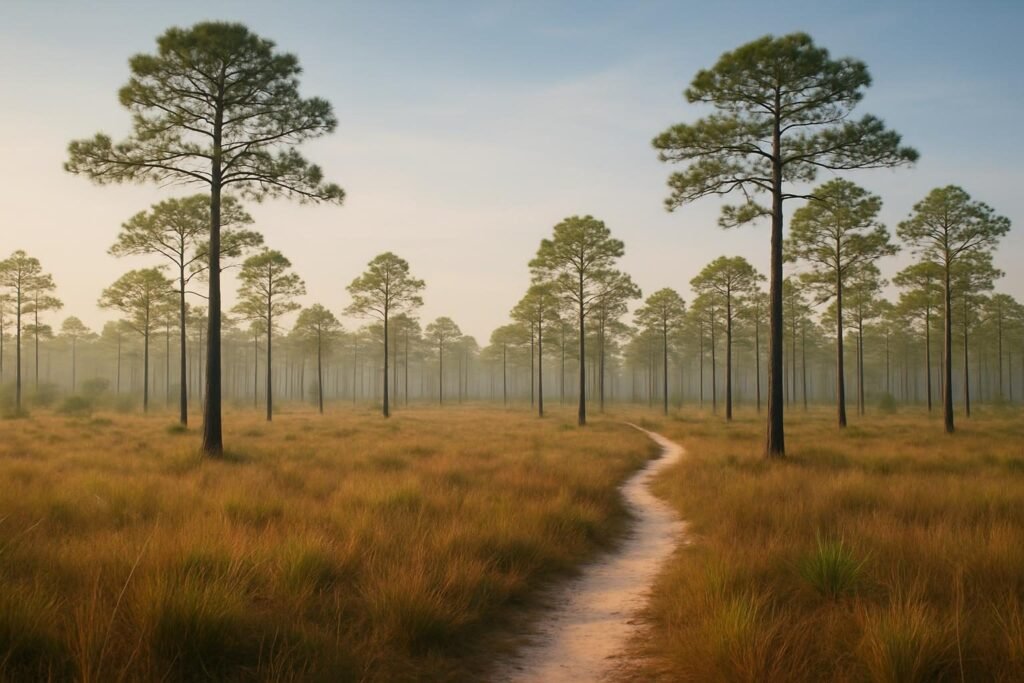
Quick answer: Croatan National Forest is a roughly 160,000-acre mix of pine flatland, pocosin swamp, saltwater marsh and river shoreline that starts just south and east of New Bern. The best ways to see it are the Neusiok Trail for hiking, the forest’s creeks and rivers for paddling, and its developed campgrounds for overnight stays. Go between October and April for comfortable weather, and always check the U.S. Forest Service for current closures and conditions.
Key takeaways
- The forest sits right next to New Bern, so a half-day trip is realistic from downtown, Trent Woods or James City.
- The Neusiok Trail is the signature long hike, running from the Neuse River side toward the Atlantic Ocean side of the forest.
- Ticks, mosquitoes and biting flies are real from spring through fall; plan for them rather than hoping.
- This is one of the best places in the country to see native carnivorous plants, including Venus flytraps in the right habitat.
- Trail and road conditions change after storms and heavy rain, so confirm with the Forest Service before you drive out.
What Croatan National Forest Actually Is
Croatan is one of the few coastal-plain national forests, and it feels nothing like the mountain forests most people picture. It is flat, wet and quiet, with longleaf and loblolly pine, pocosin shrub bogs, cypress and gum swamps, and brackish marsh along its edges.
It spreads across parts of Craven, Carteret and Jones counties, bounded by the Neuse River, the Newport River and the White Oak River area. For most Craven County residents, the usual doorways are US-70 toward Havelock and Cherry Point, and NC-43 and nearby roads south of New Bern. For more outdoor spots closer to town, see our guide to the best parks in New Bern and Craven County.
Expect water everywhere. Even the “dry” trails cross low ground, and after a wet week some sections turn to standing water.
Hiking: The Neusiok Trail and Shorter Walks
The Neusiok Trail is the forest’s best-known route. It runs roughly 20 miles from the Neuse River shoreline at one end to the Newport River and coastal side at the other, passing through pine forest, pocosin and small creek crossings. It is a point-to-point trail, so day hikers usually do a section and arrange a shuttle or turn around.
Here is a quick way to think about your options:
| Option | Best for | What to know |
|---|---|---|
| Neusiok Trail sections | Day hikers and backpackers | Flat but can be wet, with roots and blowdowns after storms |
| Short nature trails near developed areas | Families and first-timers | Easier footing, often with boardwalks or interpretive signs |
| Forest roads and shoreline access | Birders and photographers | Road conditions vary; check access before driving in |
What to carry
- More water than you think you need; there are no reliable sources on the trail.
- Waterproof or quick-drying shoes, because wet crossings are normal.
- Insect repellent, plus permethrin-treated clothing if you hike in warm months.
- A downloaded map and a paper backup; cell coverage is patchy in the interior.
Local tip: Do a full tick check when you get home, not just at the trailhead. Pay attention to your hairline, behind the knees and around waistbands, and check dogs too.
Paddling Routes Around the Forest
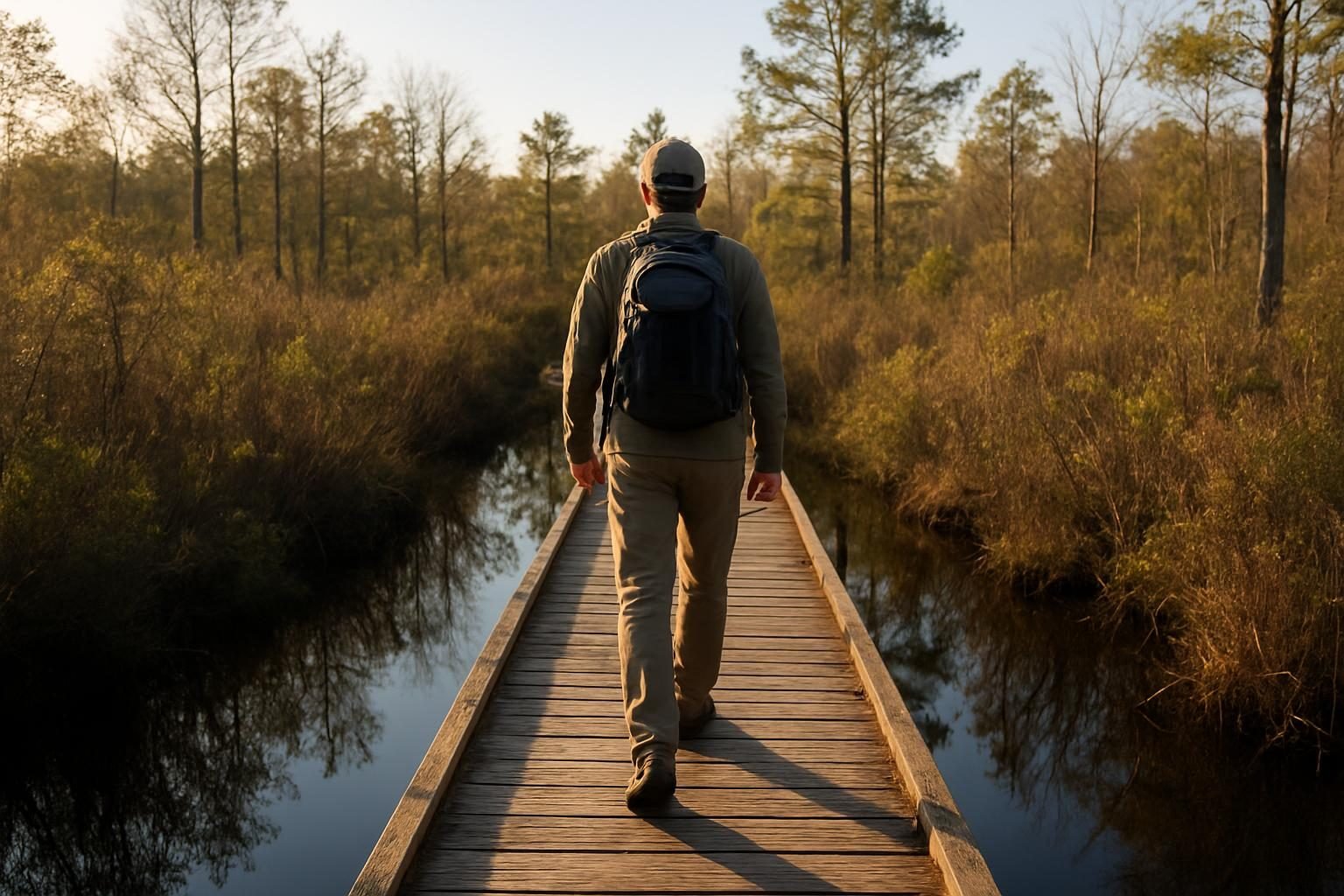
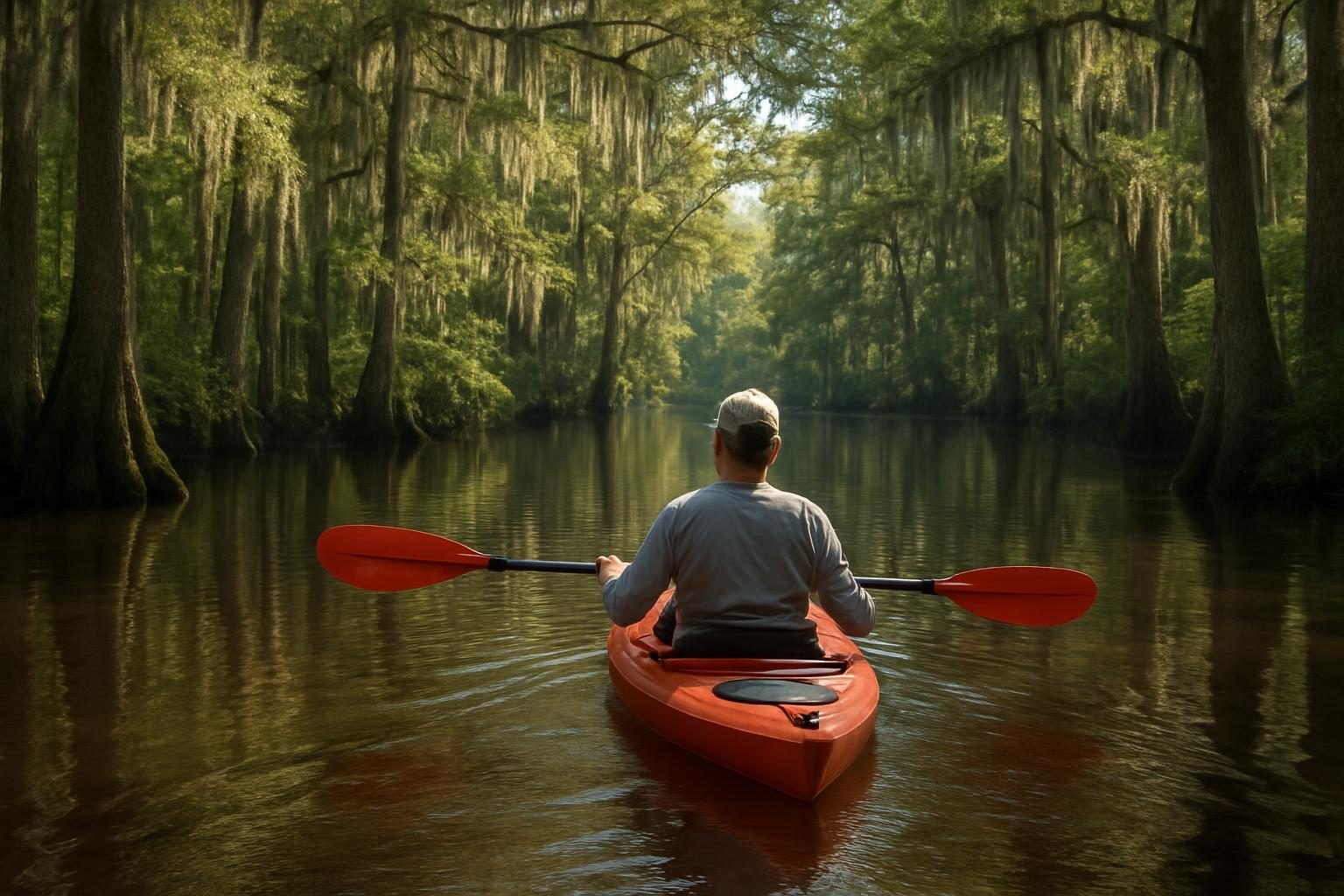
Paddling is arguably the best way to see Croatan. Blackwater creeks, tannin-stained and slow, wind through cypress and gum, and the larger rivers and estuaries on the forest’s edges open into wide, wind-exposed water.
Creeks versus open water
- Sheltered creeks: Calm, shaded and good for beginners, though some are narrow, wind through downed trees and can be hard to follow without a map.
- Open rivers and sounds: Wider and more scenic, but wind and chop can build fast, and powerboat traffic is a factor on the Neuse side.
Tides and wind matter even on the lower reaches, since the water level and flow can shift with both. Time your trips so you are not fighting a headwind home. For a broader look at what the water around here is like, see our guide to boating on the Neuse and Trent rivers in New Bern, and our upcoming piece on kayaking around New Bern.
Check with the Forest Service or a local outfitter about launch points, water levels and any downed-tree reports before you go. Do not rely on a years-old online route description.
The forest is flat and wet, so the best views are at water level, from a canoe or kayak.
Camping in Croatan National Forest
Camping options fall into two broad types: developed campgrounds and dispersed or primitive camping. Details such as fees, reservations, seasons and rules change, so confirm everything with the Forest Service before you pack the car.
- Developed campgrounds: Typically offer designated sites, restrooms and a managed setting. They are the easiest choice for families and first-timers.
- Primitive and backcountry camping: More solitude, but you carry your own water and pack out everything. Rules about where and how you can camp apply, so check the current regulations.
Camp setup basics for wet, buggy country
- Choose a tent with solid bug netting and a rainfly that actually seals.
- Pitch on higher ground; low spots flood quickly in a summer thunderstorm.
- Keep food sealed and stored away from your sleeping area.
- Check for burn bans and fire rules before you plan on a campfire.
- Tell someone your route and return time if you go beyond developed areas.
Carnivorous Plants: What to Look For
Croatan is well known for native carnivorous plants, which thrive in the nutrient-poor, damp, sandy soils of the longleaf pine savannas and bog edges. The famous one is the Venus flytrap, which grows natively only in a small region of the Carolinas.
You may also spot pitcher plants and sundews if you know where to look. They tend to show up in open, wet, sunny habitat rather than in thick shade.
- Look, don’t pick. Removing or damaging these plants is harmful, and rules protect them in the forest.
- Stay on the path. The habitat is fragile, and one careless step can crush plants you never noticed.
- Ask first. The Forest Service can point you toward areas where visitors commonly see them and explain current rules.
Late spring tends to be a good time to look for blooms and active growth, but timing varies from year to year.
Ticks, Bugs and Other Critters
Be honest with yourself about the bugs. This is eastern North Carolina wetland country, and insects are part of the deal.
| Problem | When it peaks | What helps |
|---|---|---|
| Ticks | Spring through fall, with some activity in mild winter spells | Repellent, treated clothing, long pants tucked into socks, post-hike checks |
| Mosquitoes | Warm months, especially near standing water at dusk | Repellent, long sleeves, camp away from stagnant pools |
| Biting flies and gnats | Late spring and summer, especially near marsh | Light-colored clothing, a head net, breeze and open sites |
Snakes live here too, including venomous species. Watch where you step and put your hands, and give any snake plenty of room. Poison ivy is common along trail edges as well.
If you develop a rash, fever or unusual symptoms after a tick bite, talk to a medical provider. The Carolina East medical area in New Bern is the main local hub for care.
Best Seasons to Visit
Timing makes or breaks a Croatan trip. For a sense of local conditions month by month, our upcoming guide to New Bern weather by month will help.
- Fall (October to November): Cooler, drier and far fewer bugs. This is the favorite for many local hikers and paddlers.
- Winter: Quiet and mild on good days, with the best visibility through the trees. Cold snaps and wet spells still happen.
- Spring: Wildflowers and active carnivorous plants, but ticks and pollen ramp up quickly.
- Summer: Hot, humid and buggy, with afternoon thunderstorms. Go early and carry extra water, or paddle instead of hiking.
Hurricane season runs through the fall, so keep an eye on forecasts and expect closures after major storms. Our guide to hurricane season in New Bern covers what that means locally.
Planning Your Trip From New Bern or Havelock
Croatan works as a half-day escape or a full weekend. New Bern residents can pair it with a visit to downtown for dinner afterward, and Havelock and Cherry Point families are close to the forest’s northern and eastern edges. If you are new to the area, our guide to living in Havelock explains how the base community connects to the outdoors.
Looking for more to do beyond the forest? Browse our local’s list of things to do in New Bern, our roundup of free things to do, or ideas for kids. More outdoor coverage lives in our Rivers & Outdoors hub.
Before you go checklist
- Check the USDA Forest Service page for the Croatan National Forest for alerts, closures and fees: fs.usda.gov.
- Confirm the weather, wind and any burn restrictions.
- Pack water, repellent, a map, a first-aid kit and a charged phone.
- Tell someone where you are going and when you expect to return.
FAQ
Is Croatan National Forest free to visit?
Entering and walking in much of the forest is generally free, but some campgrounds and recreation areas charge fees. Check the Forest Service for current details.
How long is the Neusiok Trail?
It is roughly 20 miles from end to end. Most day hikers do a section rather than the whole thing, so plan a shuttle or an out-and-back route.
Can I see Venus flytraps in the forest?
Yes, in the right habitat, since the plants are native to this part of the Carolinas. Look without touching, stay on the path and never remove plants.
What is the worst time of year for bugs?
Late spring through early fall is the most challenging for ticks, mosquitoes and biting flies. Fall after the first cool snaps is usually the most comfortable.
Do I need a permit to camp?
It depends on where and how you camp. Developed campgrounds have their own reservation and fee rules, so confirm current requirements with the Forest Service before you go.