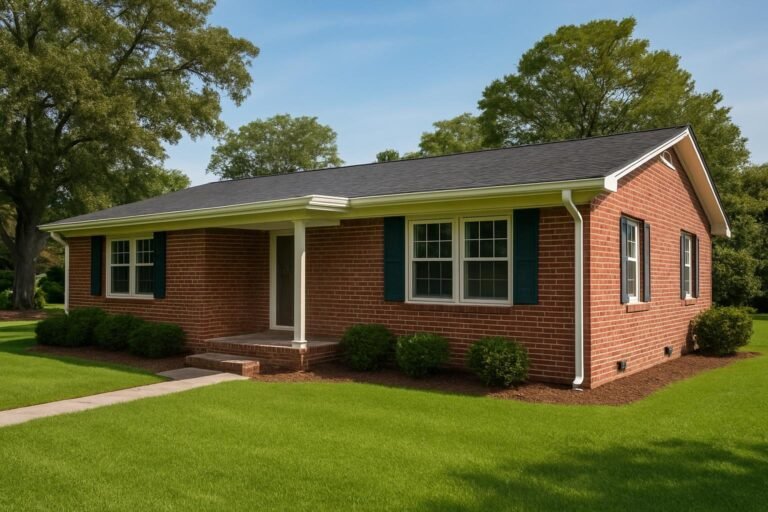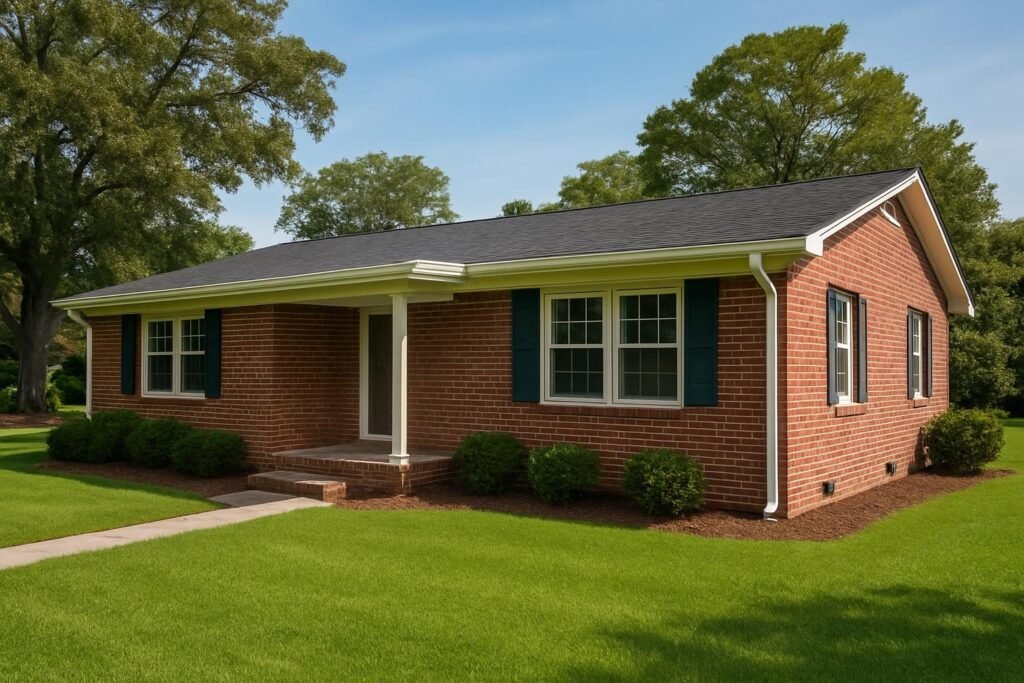
Quick answer: For most New Bern homes, seamless aluminum gutters with properly sized downspouts are the best value, and gutter installation in New Bern, NC typically runs from a few thousand dollars for an average house, depending on length, material and the number of corners. On our flat, low-lying lots, where the water goes after the downspout matters as much as the gutter itself.
Key takeaways
- Seamless aluminum is the usual choice here: fewer leaks, less maintenance, moderate cost.
- Flat lots and high water tables mean downspout extensions and drain lines matter more than gutter style.
- Heavy summer downpours and hurricane rain favor 6-inch gutters over 5-inch.
- Gutter guards help under oaks and pines, but none is truly maintenance-free.
- All cost figures below are typical ranges; get written quotes from more than one installer.
If you would rather have someone look at your roofline in person, you can request help with home repair from a vetted local pro using the form on this page.
Why gutters matter more in Craven County
New Bern sits on low, flat ground between the Neuse and Trent rivers, with a high water table and sandy-clay soil that drains slowly. Our summer thunderstorms can dump an inch of rain in under an hour, and tropical systems add days of it. Gutters are the first line of defense for everything beneath the roof.
When roof runoff has nowhere to go, it tends to show up in predictable places:
- Crawl spaces: pooling water near the foundation feeds the moisture problems covered in our guide to crawl space moisture in Eastern NC.
- Fascia and soffit: constant dampness invites rot, which is expensive to repair.
- Landscaping and siding: splash-back stains siding and washes out mulch beds.
- Foundations: persistent saturation can contribute to the settling issues described in foundation repair in New Bern.
Seamless vs sectional gutters
This is the first decision most homeowners face. Sectional gutters come in 10-foot lengths joined with connectors every few feet. Seamless gutters are formed on site from a coil of metal, so each run is one continuous piece with seams only at corners and downspouts.
| Feature | Seamless | Sectional |
|---|---|---|
| Leak points | Corners and outlets only | Every joint |
| Typical cost | Moderately higher | Lower upfront |
| Installation | Fabricated on site by a pro | DIY-friendly |
| Maintenance | Less sealant work over time | Joints loosen and need resealing |
| Best for | Most homes, long runs | Small repairs, tight budgets, DIY |
In humid river country, every joint is a place for sealant to fail, so seamless usually pays for itself. Sectional makes sense for a small shed, a short repair to existing gutters, or a confident DIYer.
Materials and sizes
Aluminum
The standard here. It does not rust, comes in many colors and is light enough to hang easily. It can dent from ladders and falling limbs, so thicker gauge is worth asking about.
Vinyl
The cheapest option, mostly sold as sectional DIY kits. Vinyl can become brittle in strong sun and sag when loaded with water and debris.
Copper and galvanized steel
Copper suits some historic-district homes and looks wonderful, but it costs several times more than aluminum. Steel is sturdy but can rust where coatings wear through, which is a real concern in salty, humid air. If you own an older house, our older home maintenance guide covers which details are worth preserving.
5-inch vs 6-inch
Five-inch is the common default. Six-inch handles roughly half again as much water and is the better pick for large roof planes, steep pitches, or any house where overflow has been a problem. Many installers also recommend 3×4-inch downspouts instead of the smaller 2×3 size.
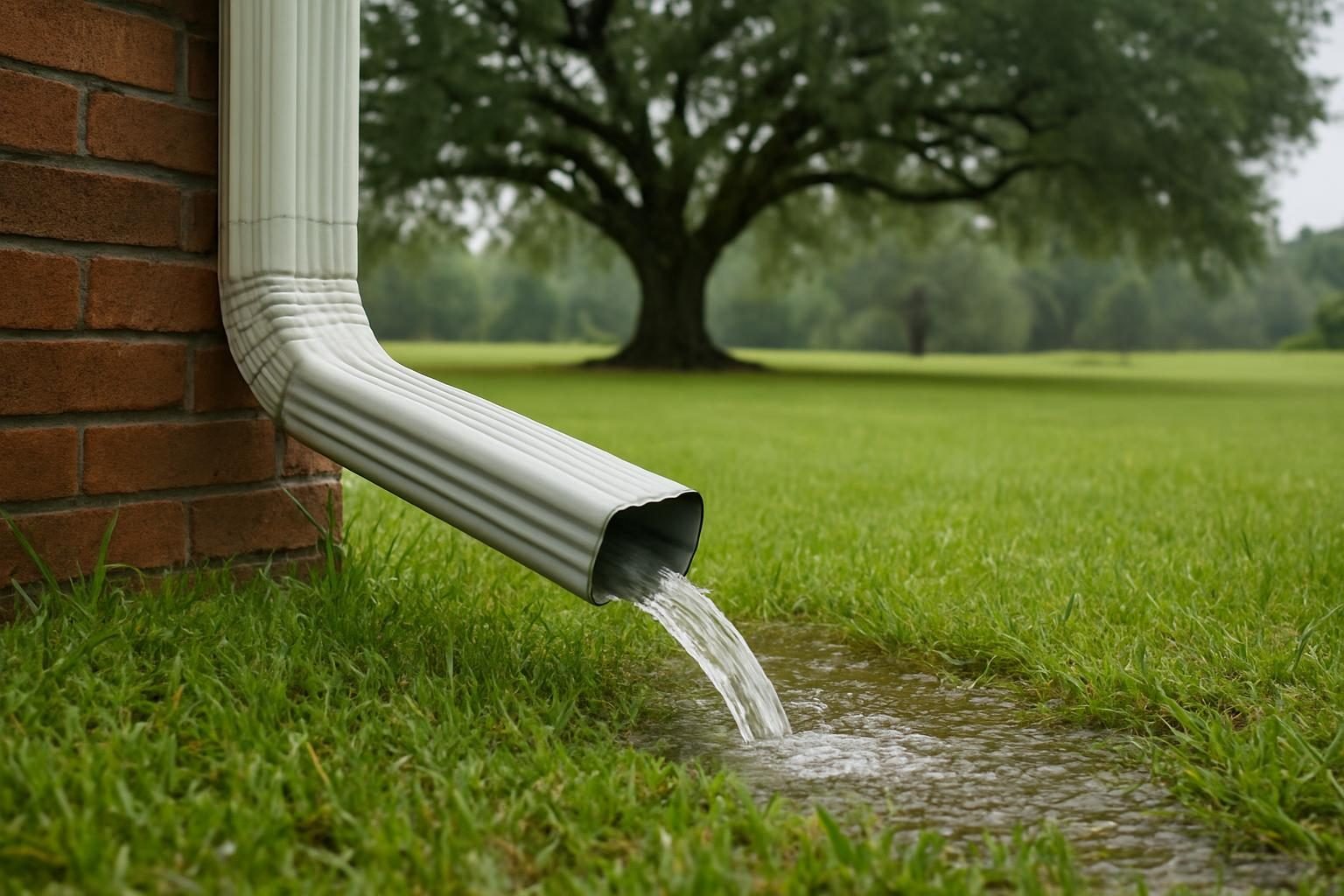
On flat Craven County lots, a gutter is only as good as the place its downspout sends the water.
Downspout drainage on flat lots
Here is the part many quotes skip. Much of New Bern, River Bend, Trent Woods and the neighborhoods around Brices Creek has very little natural slope. Water that leaves a downspout can sit against the house instead of running away.
Options, from simplest to most involved:
- Downspout extensions: flexible or rigid pipe that carries water at least 4 to 6 feet from the foundation. Cheap and effective where the ground allows.
- Splash blocks: fine as a supplement, rarely enough on their own.
- Buried drain lines: solid pipe sloped to a pop-up emitter, a swale, or a street or ditch outlet where permitted.
- Dry wells or French drains: useful where soil drains reasonably, less so where the water table sits high.
- Regrading: adding soil near the foundation so the ground slopes away, sometimes the real fix.
Local tip: Watch your yard during a hard rain before you buy anything. Note where water pools and where it flows. That tells you more about the right downspout plan than any catalog.
Be careful about discharging onto a neighbor’s property or into a shared easement. Rules vary, and in some subdivisions the HOA or the town has requirements, so confirm with the relevant office or your installer.

Gutter guards: do you need them?
Between live oaks, pines, sweetgum balls and pollen season, gutters in our area clog fast. Guards reduce how often you climb a ladder, but they do not eliminate it.
| Guard type | Pros | Cons |
|---|---|---|
| Mesh screens | Blocks leaves and larger debris, moderate cost | Pine needles and shingle grit can still collect on top |
| Surface-tension (reverse curve) | Sheds debris well | Can overshoot in heavy downpours; pricier |
| Foam inserts | Cheap and simple | Absorb water, hold debris, short lifespan |
| Snap-in plastic covers | Low cost | Gaps let in small debris; can warp in heat |
If your house sits under mature trees, guards are usually worth it. If a limb overhangs the roof, consider trimming it first; our tree removal guide explains costs and permits. Either way, plan on at least a yearly inspection and rinse.
Typical cost ranges
Prices vary by installer, season, roof height and design. Treat these as rough estimates, not quotes:
| Item | Typical range |
|---|---|
| Sectional vinyl (materials only) | A few dollars per linear foot |
| Seamless 5-inch aluminum, installed | Roughly $6 to $12 per linear foot |
| Seamless 6-inch aluminum, installed | Roughly $8 to $14 per linear foot |
| Copper, installed | Often $25 per linear foot or more |
| Gutter guards, added | Roughly $3 to $10+ per linear foot |
| Buried drain line or extensions | Varies widely with length and soil |
A typical single-story house may need 150 to 200 linear feet, which puts a full seamless aluminum job in the low to mid thousands. Two-story homes, complex rooflines and added guards push it higher. Compare costs with other home expenses in our cost of living breakdown.
Cheap gutters hung on a failing fascia board just move the expense to the next repair.
Roof, fascia and storm considerations
Gutters hang from the fascia, so soft or rotted wood must be repaired first. Ask any installer to probe the fascia before hanging new runs. If shingles are aging or leaking, sort out the roof at the same time; see roof repair in New Bern for what to look for.
For storm season, ask about hidden hangers spaced closer together, which hold better under wind and debris load. Gutters are not a hurricane-proof item, so include them in your hurricane prep checklist: clean them out before a storm, check downspout connections and secure loose sections.
How to hire an installer
- Get at least two or three written quotes with the same scope: size, gauge, color, guards, downspout count and where water will be discharged.
- Confirm the company is licensed where required and carries liability insurance; ask for proof.
- Ask whether they will repair fascia or flag rot before installation.
- Request a clear warranty in writing, covering both materials and workmanship.
- Verify they will haul away old gutters and clean up fasteners, which can puncture tires and bare feet.
The NC Licensing Board for General Contractors and the Better Business Bureau are useful starting points for checking a company, and for broader storm and flood context the National Weather Service Newport/Morehead City office publishes local forecasts. For vetted help, request help with home repair from a local pro through the form on this page. Browse more options in our Local Pros directory and our full Home & Property section.
FAQ
Are seamless gutters worth the extra cost in New Bern?
Usually, yes. With fewer joints there are fewer places to leak, which matters in our heavy-rain, humid climate. They are fabricated on site, so a pro must do the work.
Should I choose 5-inch or 6-inch gutters?
Six-inch is a smart upgrade for large or steep roofs and for any house that has overflowed in past storms. Five-inch works for smaller, simpler roofs.
How far should downspouts discharge from the house?
A common guideline is at least 4 to 6 feet, and farther on flat lots. Check where the water actually goes, and avoid sending it toward a neighbor.
How often should gutters be cleaned?
At least twice a year, and more often under oaks and pines. Clean before hurricane season and after leaf and pollen drops.
Do gutter guards eliminate cleaning?
No. They reduce it, but pine needles, shingle grit and pollen can still collect. Plan on an annual check regardless of guard type.
Need gutters installed or repaired in New Bern?
Tell us about your home and a vetted local pro will follow up with next steps and a quote.