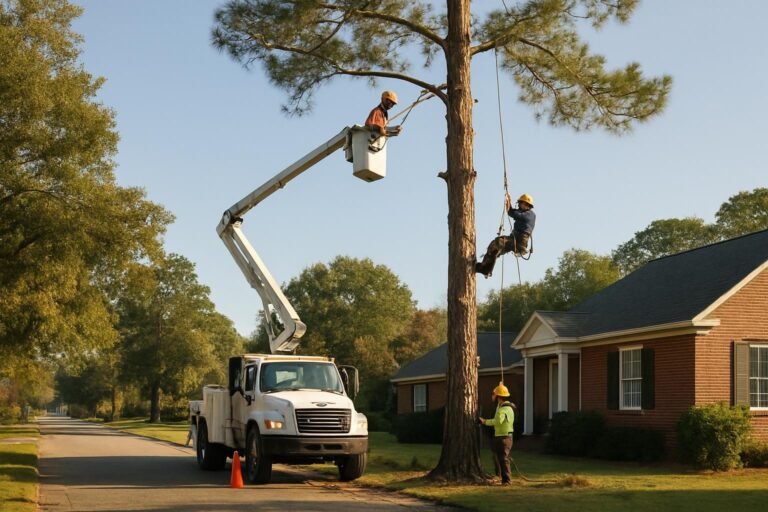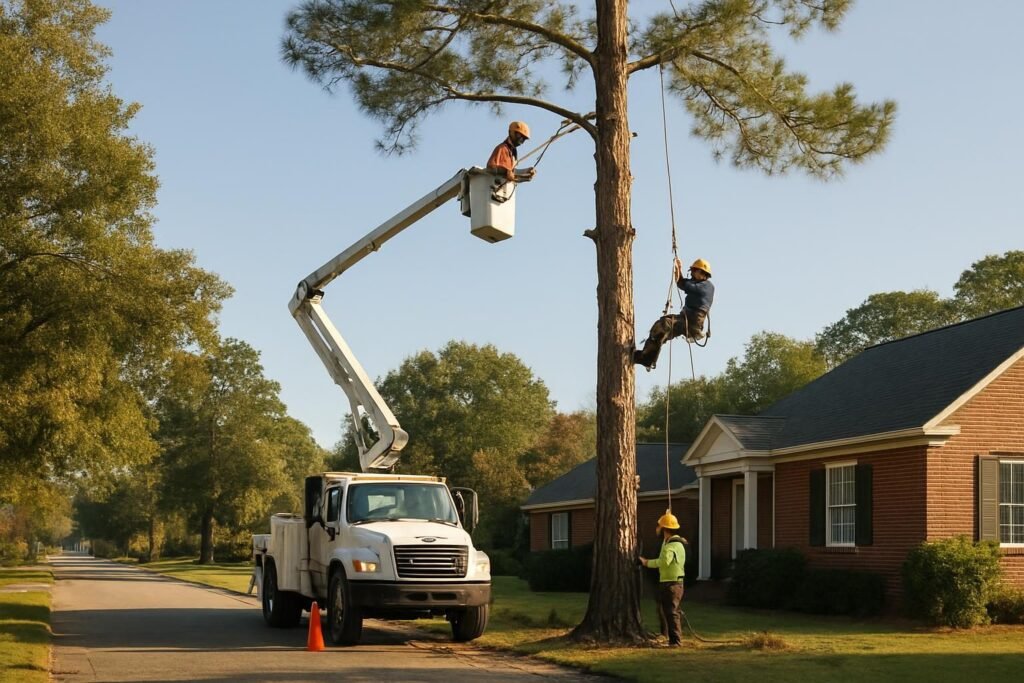
Quick answer: Tree removal in New Bern typically runs from a few hundred dollars for a small tree to several thousand for a large oak or pine near a house, power lines or water. Costs depend on size, access and risk, and storm-damaged trees cost more. Check city and historic district rules before you cut anything, especially in older neighborhoods.
Key takeaways
- Typical New Bern removals range from roughly $300 to $3,000+, with large, hard-to-reach trees at the top end.
- Leaning, dead or root-damaged trees near the house are the ones to deal with before hurricane season.
- Trees in the historic district and some city rights-of-way may be regulated, so confirm with the city first.
- After a storm, expect high demand and price swings. Get written quotes and proof of insurance.
Our wet, warm climate grows big trees fast. Live oaks, loblolly pines, water oaks and sweetgums shade nearly every street from downtown New Bern to Trent Woods and River Bend. Those same trees get heavy in a wet spring, rot from the inside in humid summers and come down in hurricanes. This guide covers what removal costs, how to tell when a tree is a real hazard, what rules to check and how to prepare before the next storm.
If you already know you need a tree taken down, you can request help with tree removal from a vetted local pro using the form on this page.
What Tree Removal Costs in New Bern
There is no flat rate. Crews price by the job, based on how dangerous and difficult it is. The figures below are typical ranges and estimates for our area, not quotes. Actual prices vary by company and season.
| Tree size and situation | Typical range |
|---|---|
| Small tree (under about 30 ft), open yard | $300 to $800 |
| Medium tree (30 to 60 ft), clear access | $800 to $1,800 |
| Large pine or oak (60 ft+), some obstacles | $1,500 to $3,500 |
| Large tree over a house, fence, pool or power lines | $2,500 to $6,000+ |
| Stump grinding (per stump) | $100 to $500+ |
| Emergency or storm-damaged removal | Often 1.5x to 2x normal rates |
What pushes the price up
- Height and trunk diameter. A mature live oak with a wide canopy is a very different job from a leggy pine.
- Access. Backyards behind fences, narrow downtown lots and trees on the water side of a house often mean hand rigging instead of a bucket truck.
- Targets below. Houses, docks, sheds and pools require lowering sections with ropes and take longer.
- Utility lines. Work near power lines may require coordination with the utility, so ask your contractor how they handle it.
- Debris haul-off. Some quotes include chipping and hauling, others leave logs and brush. Ask.
Always get at least two written quotes that spell out what is included: removal, cleanup, stump grinding and disposal.
When a Tree Is a Hazard
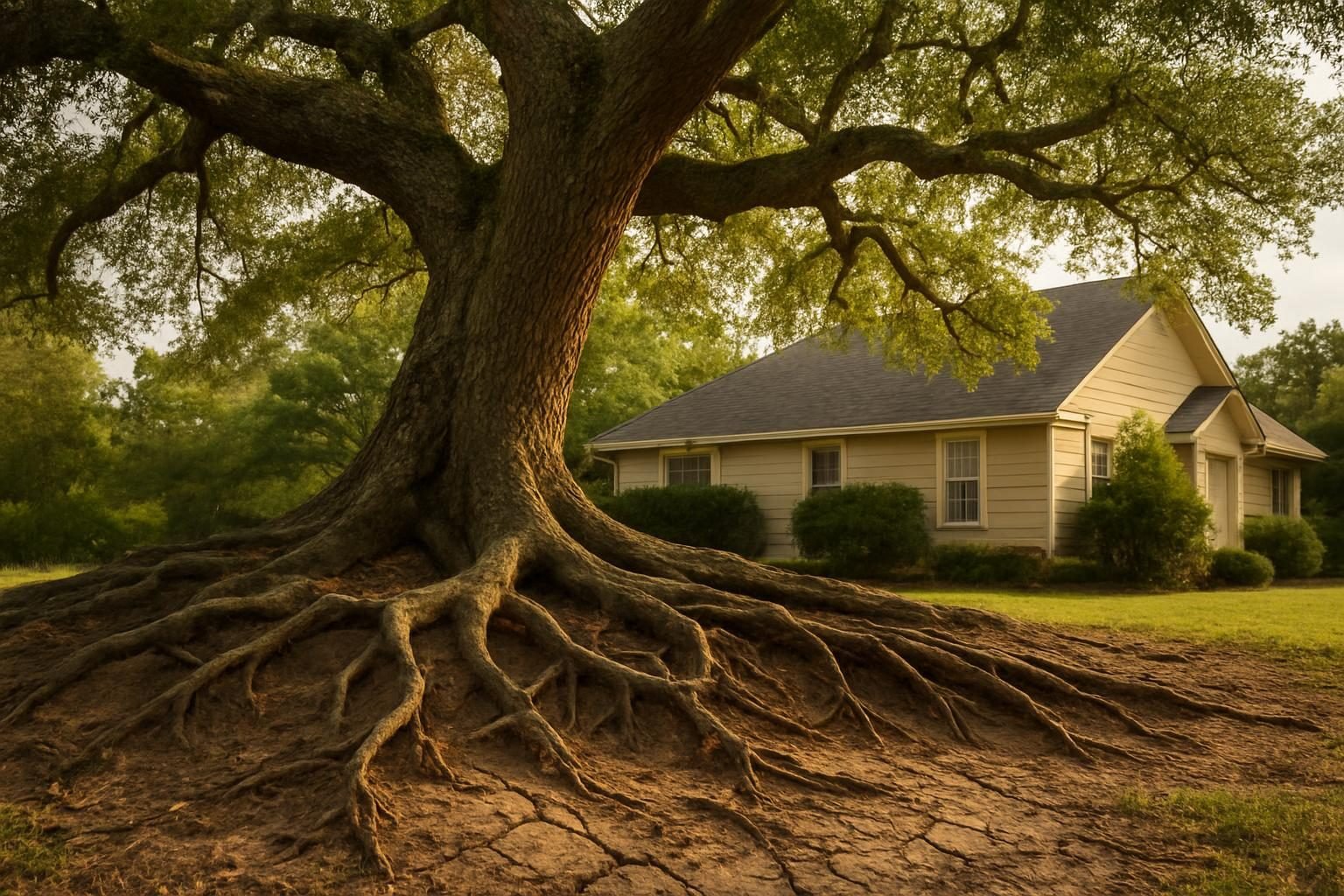
Not every tree that looks rough needs to come down. Some can be pruned or cabled. But certain warning signs deserve prompt attention, particularly if the tree could hit a home, a driveway or a neighbor’s property.
Signs worth acting on
- A new or worsening lean, especially with soil heaving or cracking at the base.
- Dead or hanging branches, or a crown with few leaves while neighbors’ trees are full.
- Mushrooms or conks at the base, which often point to internal rot.
- Cracks, splits or cavities in the trunk, or bark falling away in sheets.
- Roots lifting a driveway or slab, or cut by recent trenching or construction.
- Standing water around the roots. Trees in low, flood-prone yards can be weakened after long wet periods. See our guide to flood zones in New Bern if you are not sure how your lot drains.
Local tip: Pines near the house deserve extra scrutiny. They are shallow-rooted in our sandy, saturated soil, and a tall one with a thin crown can go over in a strong gust even when it looks healthy.
For a second opinion, a certified arborist can assess a tree’s health and tell you whether removal is necessary. The North Carolina Forest Service and NC State Extension both publish homeowner guidance on tree health and finding qualified professionals.
The tree that falls in a storm is usually the one that was already leaning, rotting or sitting in wet soil.
Historic District and City Tree Rules
Before you hire anyone, find out whether your tree is regulated. Rules differ depending on where the tree stands, and they can change, so treat this as a general overview and confirm details with the City of New Bern.
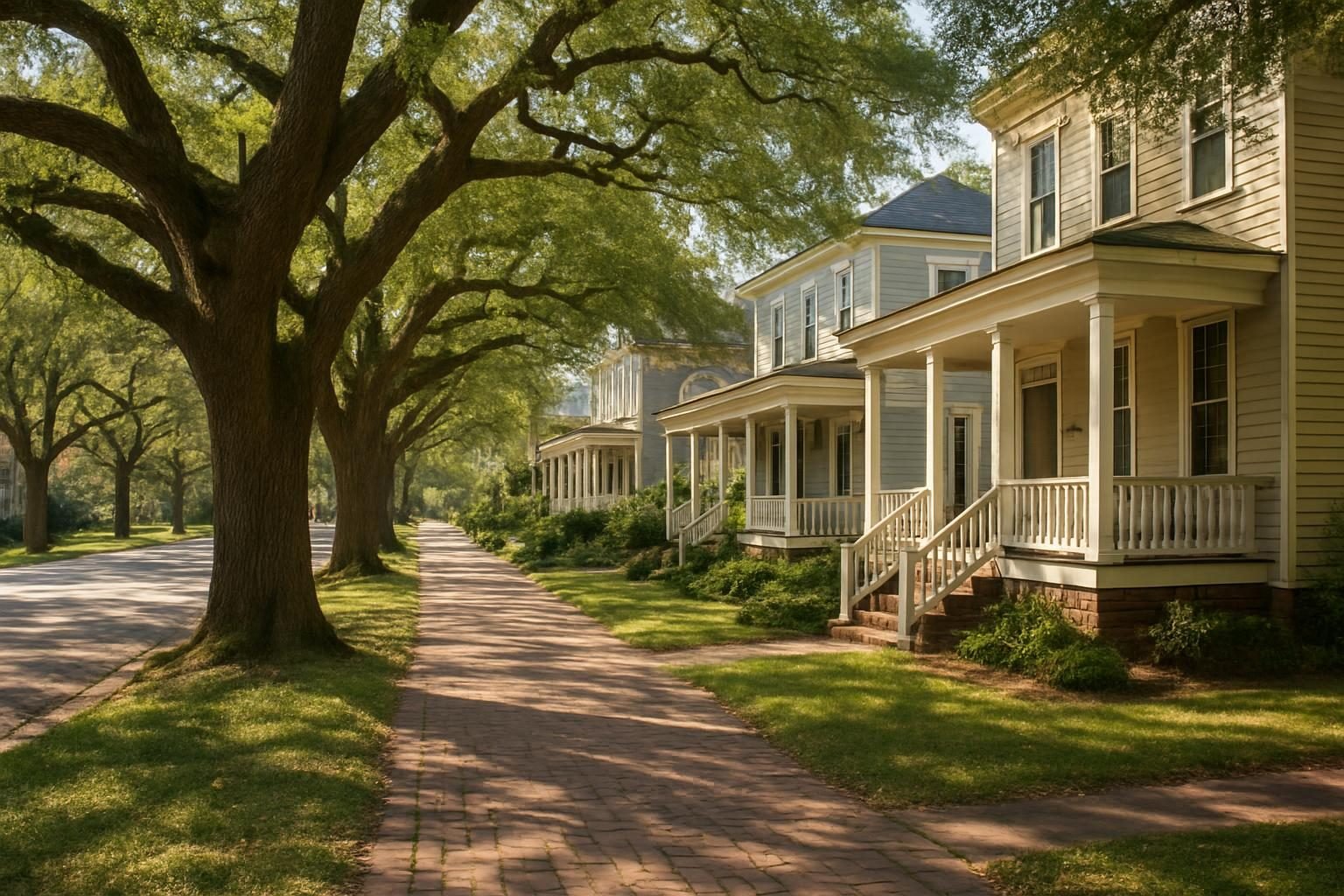
- Historic district. Older neighborhoods near downtown fall under historic preservation oversight. Work that changes the look of a property can require review, and large or significant trees may be part of that picture. Ask the city’s planning or historic preservation staff before removing a mature tree in the district.
- Street trees and rights-of-way. Trees growing between the sidewalk and the street, or on city property, generally belong to the city. Do not remove or heavily prune them yourself.
- Development and construction. Tree protection or replacement requirements may apply when you are building, subdividing or doing major site work.
- Outside city limits. Places like James City, Bridgeton, Vanceboro and Cove City follow county rules rather than city ordinances. Fewer restrictions usually apply, but check, particularly near wetlands, creeks and the Neuse and Trent shorelines, where other regulations can come into play.
- HOAs. Communities such as Fairfield Harbour and River Bend may have covenants requiring approval for tree removal, even on your own lot.
If you live in an older house, our guide to owning a historic home in New Bern explains how preservation rules affect upkeep more broadly.
Choosing a Tree Service
Tree work is dangerous, and uninsured crews are a real risk to your property and your wallet. Vet anyone before they start.
- Ask for proof of liability insurance and workers’ compensation. Request the certificate directly from the insurer, not just a photo from the contractor.
- Get itemized written quotes. They should list the trees, the work, cleanup and stump grinding.
- Look for credentials. An ISA-certified arborist on staff is a good sign, especially for judgment calls on whether to remove or prune.
- Be wary of door-knockers after storms. Out-of-area crews who show up unsolicited and demand cash up front are a common problem.
- Ask who handles permits. A good company will tell you what it checks and what is up to you.
- Do not pay in full in advance. A deposit is normal for larger jobs. Pay the balance when the work is finished and the site is cleaned up.
Topping, which means cutting a tree back to bare stubs, is not good practice. A reputable crew will explain why and offer proper pruning instead.
Storm Prep and Cleanup
Hurricane Florence showed how quickly trees become the main problem in this area, taking down roofs, fences, power lines and boats. The best time to deal with a questionable tree is well before a storm is in the forecast. Our hurricane season guide covers what we learned, and the hurricane prep checklist walks through the rest of the house.
Before the season
- Walk your yard in spring and look up. Mark any tree with dead limbs, a lean or fungus.
- Have overhanging branches trimmed back from the roof, chimney and power lines.
- Book removals in the off-season. Crews are less swamped and prices are steadier.
- Photograph your trees and property for insurance records.
After a storm
- Stay away from downed lines. Assume they are live and call the utility.
- Do not cut a tree that is under tension or resting on a structure. Leaning, pinned trunks can spring or roll without warning.
- Photograph everything before anything is moved, then call your insurer.
- Tarp the roof if you can do so safely, and see our roof replacement cost guide if the damage is serious.
- Check for water intrusion. Fallen limbs often punch through roofs. Our water damage restoration guide covers what to do first.
Insurance coverage for tree removal varies. Many policies pay to remove a fallen tree only if it damaged a covered structure, and often with dollar limits. Read your policy or ask your agent before you assume anything.
The cheapest time to remove a risky tree is a calm Tuesday in April, not the week after a hurricane.
Planning Around Your Property
Removing a tree changes more than the view. Shade, drainage and even cooling costs can shift. Mature trees on the south and west sides of a house can noticeably cut summer heat, so if your tree is healthy, weigh that before you decide. If you do remove it, consider planting a replacement in a better spot, away from the roof and power lines.
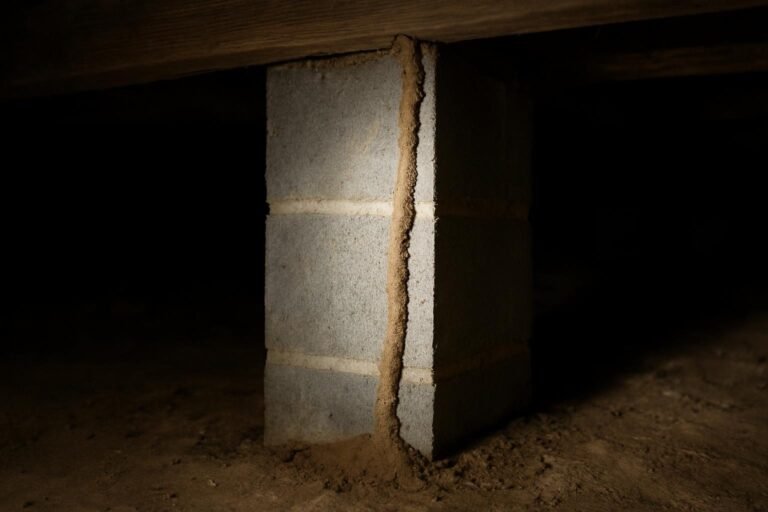
Stump grinding is worth doing if you plan to landscape, build or mow the area. Left alone, stumps attract termites and other pests, so you may want to read up on pest control in New Bern if you see signs of trouble. Large trees close to a foundation can also affect soil and slab movement, which is worth knowing if you are looking at foundation repair in New Bern down the road.
New to the area and sizing up a lot? Our overview of living in New Bern and the cost of living guide give context on yard upkeep and insurance. More local contractor guides are collected in our Local Pros hub, and general upkeep advice lives under Home & Property.
Ready to get a quote? Use the form on this page to request tree removal help from a vetted local pro.
FAQ
How much does it cost to remove a tree in New Bern?
Typical ranges run from about $300 for a small tree to $3,000 or more for a large one, and over $5,000 for difficult jobs near structures or power lines. Treat these as estimates and get written quotes.
Do I need a permit to remove a tree in New Bern?
It depends on where the tree is. Trees in the historic district, on city property or in the right-of-way may be regulated, and HOAs may have their own rules. Contact the City of New Bern before cutting, and confirm current requirements.
Does homeowners insurance cover tree removal?
Often only when a tree falls and damages a covered structure, and sometimes with a limit. Removing a healthy or merely leaning tree is usually not covered. Check your policy or ask your agent.
When is the best time to remove a tree?
Late fall through early spring is usually calmer for tree companies and easier on schedules, and it lets you handle risky trees before hurricane season. Dangerous trees should come down whenever the risk is serious.
Should I remove a tree that leans?
Not automatically. A tree that has leaned for decades may be stable, but a new lean, heaving soil or a lean toward your house is a red flag. Have an arborist take a look.
Get a Tree Removal Quote From a Vetted New Bern Pro
Tell us about your tree and property, and a vetted local tree service will follow up to discuss the job and provide a quote.