Quick answer: Crawl space moisture in eastern NC comes mostly from humid air, ground moisture and the occasional flood or high water table, and traditional foundation vents often make it worse in summer. The most reliable long-term fix is sealing the crawl space (encapsulation) and controlling humidity with a dehumidifier or conditioned air, after you have fixed any bulk water problems first.
Key takeaways
- Summer air in Craven County carries so much moisture that open vents can pull water into your crawl space.
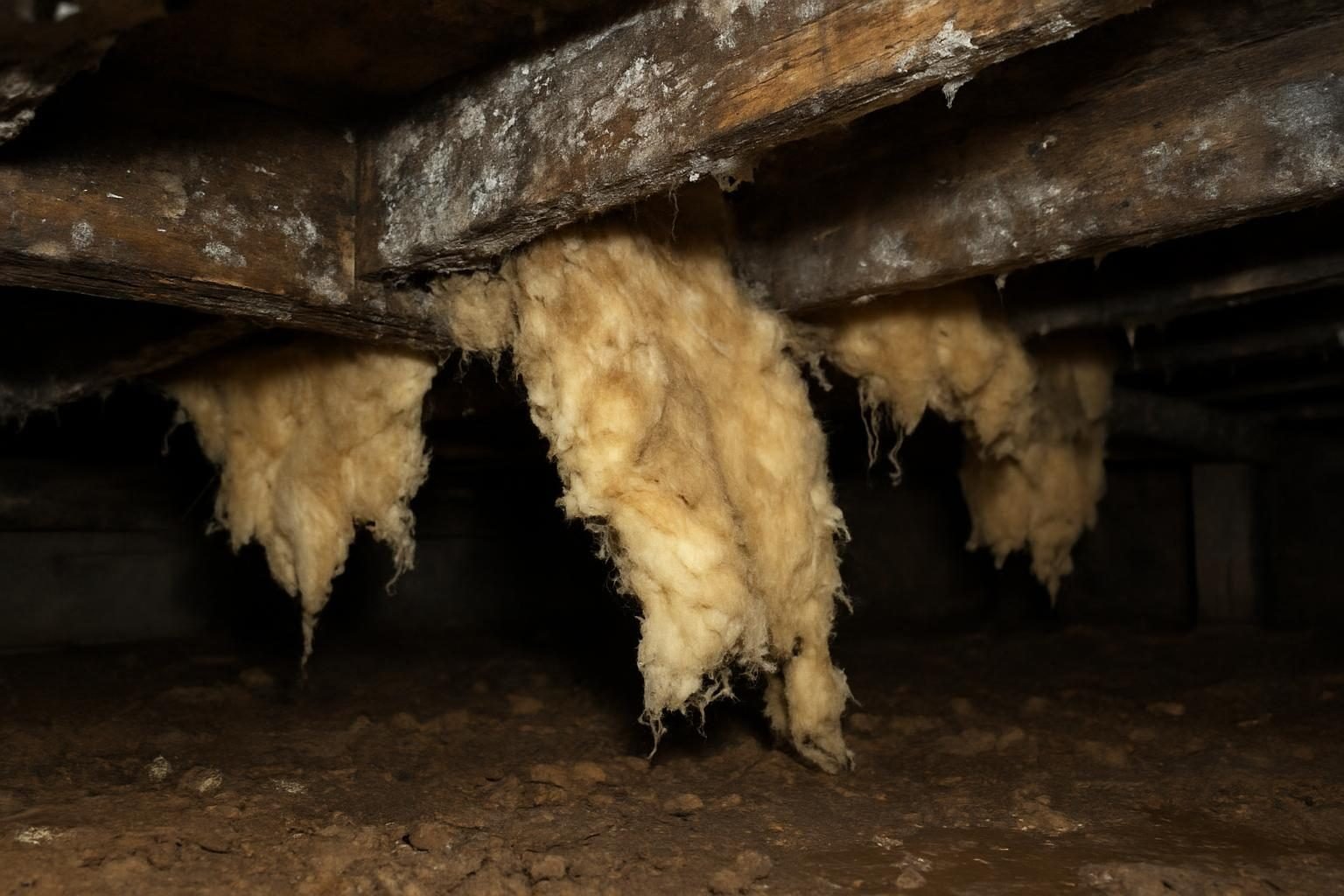
- Standing water, musty smells, sagging insulation and fuzzy growth on joists are all signs to act now.
- Encapsulation (vapor barrier, sealed vents, humidity control) usually costs more upfront than a dehumidifier alone but addresses the cause.
- Fix drainage and leaks first; no liner or dehumidifier will cure a wet crawl space on its own.
- Get written scopes from more than one contractor and ask how they handle flood-prone lots.
If you own a home in New Bern, Havelock, River Bend, Trent Woods or out toward Vanceboro and Dover, you probably have a crawl space, and you may have a moisture problem you have not looked at yet. Our heat, humidity, river-level water tables and storm history make crawl spaces one of the most neglected parts of local homes. This guide explains what is happening down there, what the fixes really involve, and what they tend to cost.
If you would rather have someone look at yours, you can request help with crawl space encapsulation from a vetted local pro using the form on this page.
Why crawl spaces get so damp in Craven County
Our region sits low, close to the Neuse and Trent rivers, with warm, wet summers. Several things stack up under a house here.
- Humid air: Coastal summer air holds a lot of water vapor. When it meets cooler surfaces (ductwork, joists, the soil) it condenses.
- High water table: Many lots in New Bern, James City, Bridgeton and the river communities have shallow groundwater, so soil under the house stays wet for long stretches.
- Bare soil: Exposed dirt releases moisture constantly, which rises into the wood framing.
- Storms and flooding: Heavy rain and surge can leave a crawl space wet for weeks. Our hurricane season guide covers the Florence experience many homeowners remember.
- Poor grading and gutters: Roof water dumped next to the foundation ends up under the house.
For a sense of how long the humid stretch lasts, see New Bern weather by month. It is longer than most newcomers expect, especially those arriving from drier states through Cherry Point.
Warning signs you can spot yourself
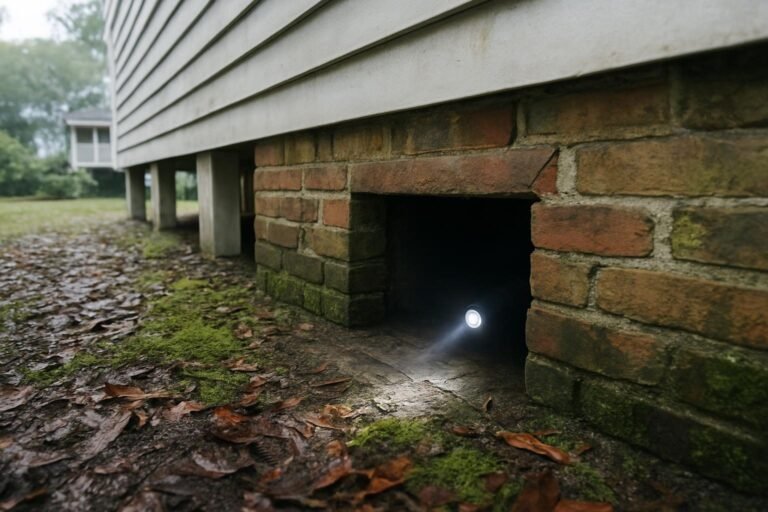
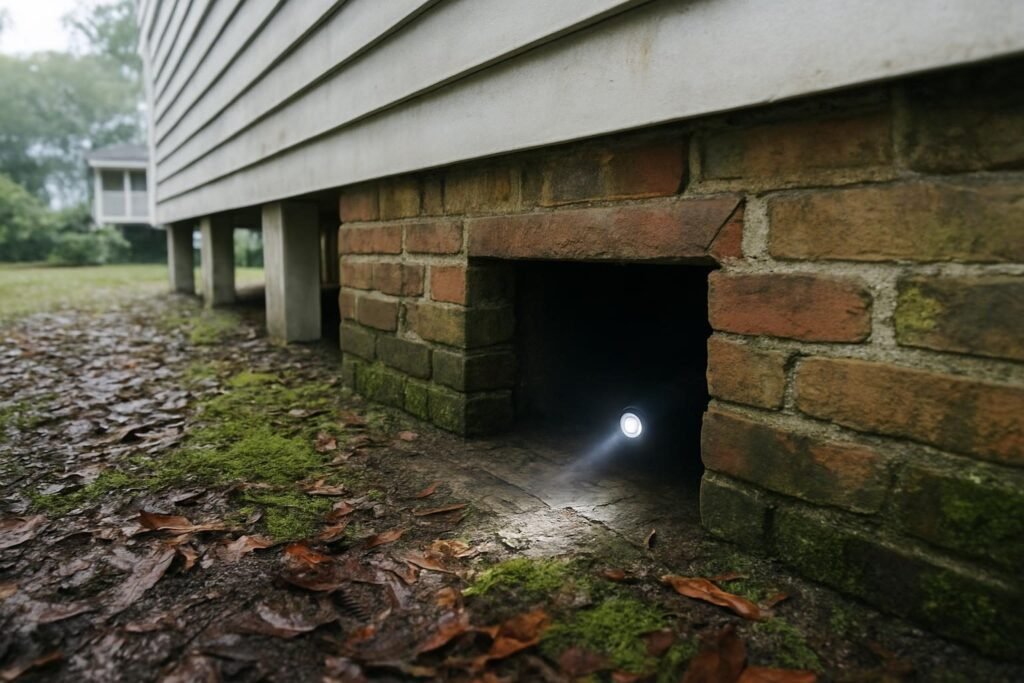
You do not need special equipment to get a first read. Put on old clothes, grab a flashlight and look through the access door, or check from the outside first.
| What you see or smell | What it usually means |
|---|---|
| Musty or earthy odor in the house | Humidity and microbial growth below are moving up through the floor |
| Sagging or fallen insulation | Moisture has loosened it, or the vapor barrier is absent |
| White or dark fuzzy growth on joists or subfloor | Active mold; humidity is staying high |
| Dark, soft or crumbling wood | Rot, possible structural concern |
| Standing water or wet soil days after rain | Drainage or groundwater issue to fix first |
| Sweating ductwork | Humid air meeting cold surfaces |
| Cupped or squeaky hardwood floors | Moisture from below swelling the boards |
Termite activity also loves damp wood. If you see mud tubes or damaged framing, read up on termites in eastern North Carolina as well.
Vented vs encapsulated crawl spaces
For decades, building practice called for foundation vents to let a crawl space “breathe.” The idea was that airflow would dry things out. In a dry climate that can work. In ours, summer air is often wetter than the crawl space itself, so vents invite moisture in.
Current building science generally favors sealing the space instead. Check current requirements with Craven County or the City of New Bern inspections office, since code and permitting details vary by project.
Traditional vented crawl space
- Vents open to outside air year-round or seasonally
- Insulation between floor joists
- Often bare soil or a thin, damaged plastic sheet
- Cheapest to build, hardest to keep dry in humid months
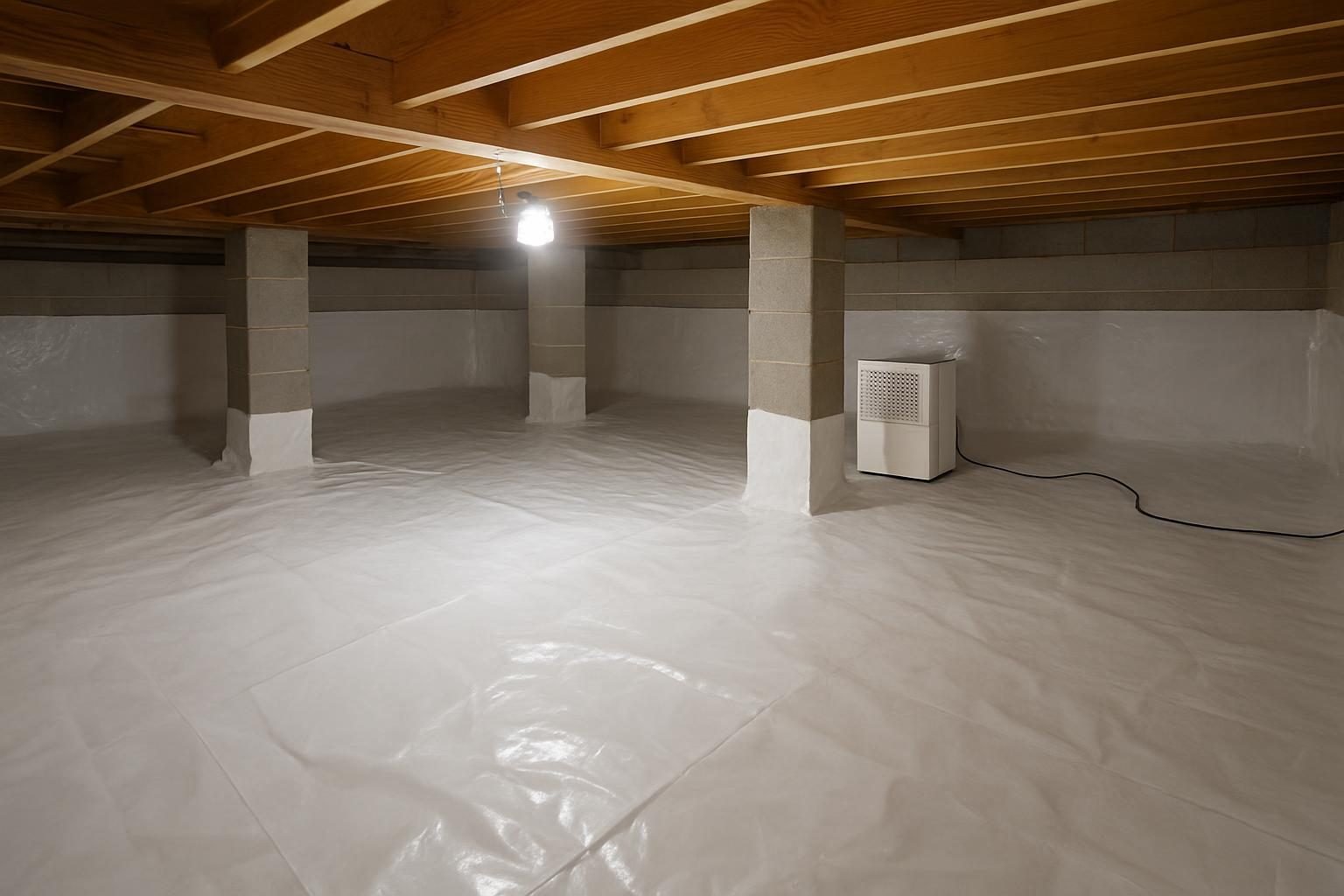
Encapsulated crawl space
- Heavy-duty vapor barrier over the soil, run up and sealed to the walls and piers
- Vents sealed off
- Humidity controlled by a dehumidifier or by conditioned air from your HVAC system
- Often insulated at the walls instead of the floor
- Needs a drainage plan (and sometimes a sump pump) where water collects
In a humid river town, the vents meant to dry your crawl space can be the thing that keeps it wet.
Do you need encapsulation, or will a dehumidifier do?
It depends on how wet the space is and what is causing it. Here is a practical way to think about it.
| Option | Best for | Limits |
|---|---|---|
| Fix gutters, grading, leaks only | Mild dampness traced to a clear water source | Does not address humid air or ground vapor |
| Vapor barrier on soil, vents left open | Tight budgets, moderate moisture | Summer humidity still enters through the vents |
| Dehumidifier alone | Already sealed or fairly tight spaces | Works hard and wastes energy if the space leaks air |
| Full encapsulation with dehumidifier | Chronic humidity, mold, musty floors, rotted insulation | Higher upfront cost; needs drainage handled first |
A dehumidifier in an unsealed, vented crawl space is a common mistake. It tries to dry the whole outdoors. Sealing first lets a smaller unit hold the space in a healthy range.
Local tip: Ask any contractor what relative humidity they are targeting and how they will verify it. Many pros aim to keep crawl spaces below roughly 60 percent; a cheap humidity monitor left in the space lets you check their work yourself.
Mold, rot and what they mean for your house
Mold on joists is common in damp crawl spaces and does not always mean a structural emergency. It does mean conditions are right for growth, and air from under the house does travel upstairs through gaps, ducts and plumbing penetrations.
Wood rot is the more serious issue. Wood that stays above about 20 percent moisture content can start to decay, and repeated wetting weakens sills, joists and subfloor over time. Soft, spongy or crumbling wood needs a professional evaluation, possibly a structural repair before any encapsulation. Our foundation repair guide covers what that looks like.
If water got in from a storm or a plumbing failure, see our notes on water damage restoration in New Bern and the after-flood home checklist for the order to work in.
For general guidance on moisture and mold in homes, the US EPA mold resources are a reliable, plain-English starting point.
What the work involves, step by step
Scopes vary, but a sound encapsulation project usually follows this sequence.
- Inspection: Moisture readings, check for standing water, rot, pest activity and failed insulation.
- Water control: Gutters, downspout extensions, grading, interior drains or a sump pump where needed.
- Cleanup: Remove old insulation, debris and loose plastic; treat or clean mold as appropriate.
- Repairs: Replace damaged framing or subfloor before covering anything.
- Vapor barrier: Heavy-gauge liner over soil and up the walls, seams taped, edges sealed.
- Seal vents and penetrations: Close foundation vents, air-seal gaps, insulate walls if specified.
- Humidity control: Install a crawl space dehumidifier or add conditioned air, with a condensate drain.
- Verify: Humidity monitor installed or readings documented.
Ductwork under the house often needs attention at the same time. If your system is old, HVAC repair in New Bern may be worth coordinating with the crawl space work.
A liner laid over a wet crawl space hides the problem for a season and then makes it harder to diagnose.
Typical cost ranges
These are rough, typical ranges meant for budgeting, not quotes. Actual pricing depends on crawl space size, access, condition, drainage needs and the contractor. Get written estimates.
| Item | Typical range (estimate) |
|---|---|
| Gutter and downspout fixes, regrading | A few hundred dollars to a few thousand |
| Basic vapor barrier on soil | Roughly $1,000 to $3,000 |
| Crawl space dehumidifier, installed | Roughly $1,500 to $3,500 |
| Sump pump and drainage addition | Roughly $1,000 to $4,000 or more |
| Full encapsulation, average home | Roughly $5,000 to $15,000 |
| Insulation removal and replacement | Roughly $1,000 to $4,000 |
| Rot repair (sills, joists, subfloor) | Highly variable, from hundreds to many thousands |
Larger or older homes, such as those in the historic district, can run higher because of irregular framing and tight access. Our older home maintenance guide explains why. Insurance does not usually cover gradual moisture damage, so factor this into your overall cost of homeownership here.
Questions to ask contractors
- What is the liner thickness, and how is it sealed to walls and piers?
- How will you handle standing water or a high water table?
- Is the dehumidifier rated for crawl space use, and where does it drain?
- What happens in a flood? Can the system be cleaned, drained or replaced?
- Is permitting needed, and who pulls it?
- What is the warranty, and what does it exclude?
Flood zones, storms and crawl spaces
If your home sits in or near a mapped flood zone, encapsulation needs extra planning. Sealed spaces can trap water after a surge, and some materials tolerate flooding better than others. Check your lot status through the flood zones in New Bern guide and with local floodplain officials, and review the hurricane prep checklist before storm season.
Buying a home instead? Ask for a crawl space inspection as part of due diligence. Our moving to New Bern guide and the broader Home & Property section cover other things worth checking.
When you are ready for a quote, you can request crawl space encapsulation help from a vetted local pro through the form on this page. You can also browse the Local Pros hub for other home services.
FAQ
Are open crawl space vents bad in eastern NC?
Often, yes. Summer outdoor air here is humid enough that vents can add moisture rather than remove it. Sealing the space and controlling humidity usually works better, though you should confirm local requirements before making changes.
Can I just put a dehumidifier in my crawl space?
You can, but it works best in a space that is already sealed. In a vented crawl space it fights constant incoming humid air, which raises energy use and may not reach a healthy humidity level.
How do I know if mold under my house is serious?
Widespread growth, soft or crumbling wood, a strong musty smell upstairs, or standing water all justify a professional inspection. Light surface growth with an obvious fixable cause is less urgent but should still be addressed.
Does encapsulation work in a flood-prone area?
It can, with the right design: drainage, flood-tolerant materials and a plan for cleanout after high water. Ask your contractor specifically how they handle flood events and check your flood zone status first.
How long does crawl space encapsulation take?
Many average-sized jobs take a few days, longer if repairs, drainage work or insulation replacement are involved. Your contractor should give you a schedule in writing.
Get a crawl space encapsulation quote in New Bern
Tell us about your home and crawl space, and a vetted local pro will follow up to schedule an inspection and written estimate.