Quick answer: For water damage restoration in New Bern, stop the water source, make the home safe, photograph everything, and call a restoration company the same day. In our humid climate, mold can start within 24 to 48 hours on wet drywall, wood and insulation, so speed matters more here than almost anywhere.
Key takeaways
- The first 24 hours decide whether you dry a home or rebuild part of it.
- Document damage and call your insurer before you throw anything away.
- Floodwater from the Neuse or Trent is different from a burst pipe, and the cleanup rules change.
- Typical restoration jobs run from a few hundred dollars for a small leak to tens of thousands for whole-home flooding.
- Humidity and crawl spaces make drying and mold prevention harder in Craven County.
Whether it’s a water heater that let go in Trent Woods, a roof leak after a summer thunderstorm, or river water in a ground floor near Brices Creek, the first few hours are the ones you control. This guide covers what to do, what to expect from a professional crew, and what it tends to cost. If you’d rather hand it off, you can request help with water damage restoration from a vetted local pro using the form on this page.
The First 24 Hours: A Step-by-Step Checklist
Work through these in order. Safety comes before saving belongings.
- Make it safe. If water is near outlets, appliances or the electrical panel, shut off power to that area at the breaker. If you have to step into standing water to reach the panel, stay out and call an electrician or your utility.
- Stop the source. Close the shutoff valve for a supply line or fixture, or shut off the main water valve. For a roof leak, tarp what you can safely reach from inside and out of the weather.
- Photograph and video everything. Wide shots first, then close-ups of damaged walls, floors, ceilings and contents. Do this before moving things.
- Call your insurance company. Ask about your deductible, whether the cause is covered, and whether they require approved vendors or an adjuster visit.
- Call a restoration company. Ask for same-day response and extraction. Most reputable firms run emergency lines around the clock.
- Start removing standing water and lifting small items. Move furniture legs off wet carpet, lift rugs and take photos and valuables to a dry room.
- Run air, but do not guess at drying. Open windows only if outdoor humidity is lower than indoors, which is rare in a New Bern summer. Fans and your AC help a little until a crew arrives with professional equipment.
Local tip: Keep a small sample or photo of damaged flooring, baseboards and material labels before demolition. Adjusters and contractors both ask for them later, and they are impossible to recreate once the debris is hauled off.
Know What Kind of Water You Have
Restoration pros sort water into three categories, and it changes what can be saved.
| Category | Typical source | What it means |
|---|---|---|
| Category 1 (clean) | Broken supply line, overflowing sink, ice maker leak | Often fully dryable if handled quickly. Porous materials may be saved. |
| Category 2 (gray) | Dishwasher or washing machine overflow, aquarium, some sump pump failures | Contains contaminants. Carpet padding is usually removed; hard surfaces can be cleaned. |
| Category 3 (black) | Sewage backup, river or storm flooding, long-standing water | Unsafe. Porous materials come out, and the area needs professional cleaning and disinfecting. |
Clean water becomes gray, and gray becomes black, if it sits. A supply-line leak you catch in an hour is a very different job from the same leak found after a long weekend away.
Anything involving floodwater from the Neuse, the Trent or a storm surge is Category 3. Do not try to wade in, run a household vacuum or save drywall. Our after-flood home checklist walks through the safe order of operations, and hurricane season lessons from Florence explains why so many local homes were hit the way they were.
How Professional Drying Actually Works
A good crew does more than run a few fans. The process usually follows a clear sequence, and you should expect your contractor to explain it.
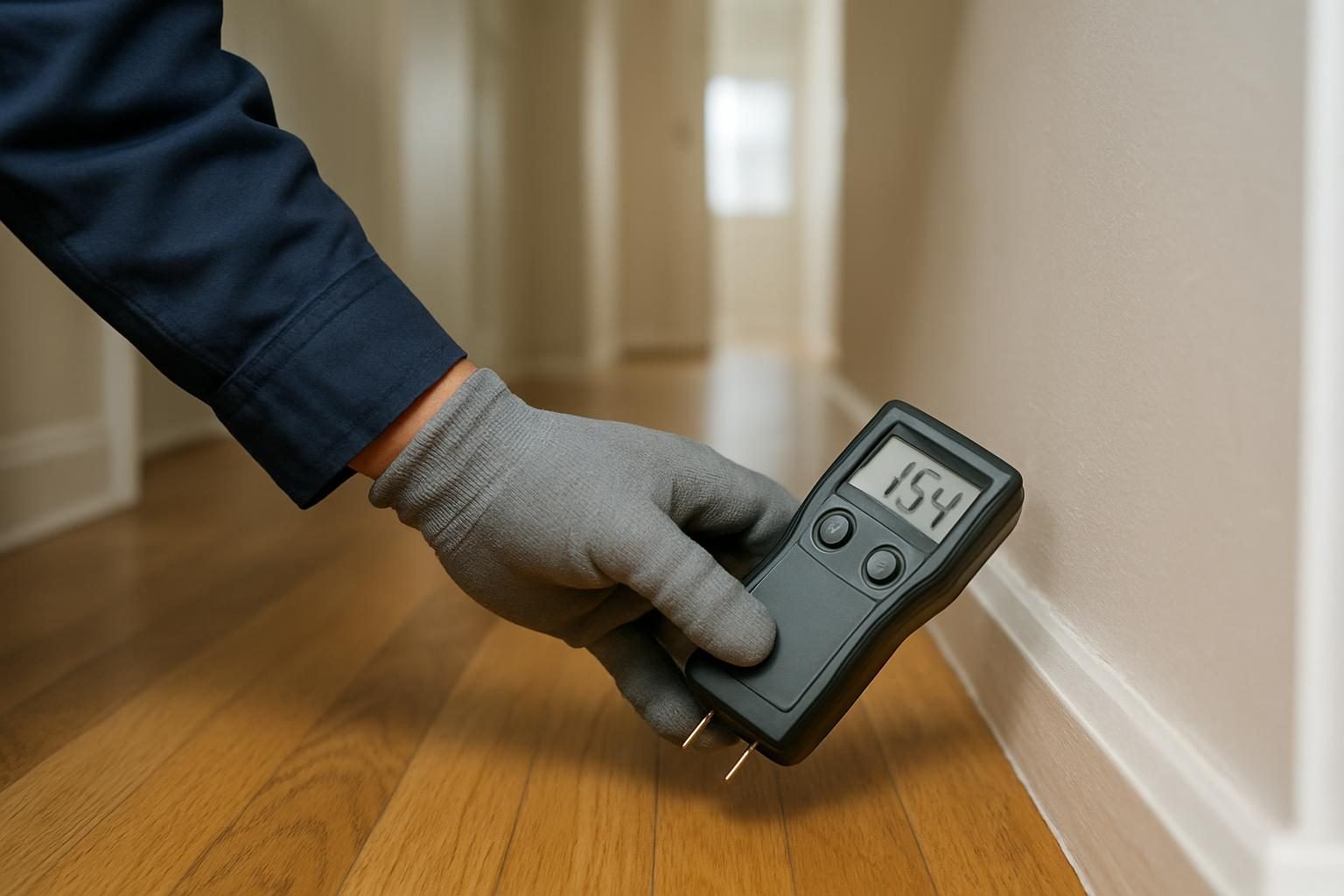
- Inspection and moisture mapping. Meters and thermal cameras find wet material you can’t see behind walls, under floors and above ceilings.
- Water extraction. Pumps and truck-mounted or portable extractors remove standing water first. This is the fastest way to cut drying time.
- Demolition of unsalvageable materials. Soaked insulation, carpet padding and swollen drywall are cut out, often a couple of feet above the waterline.
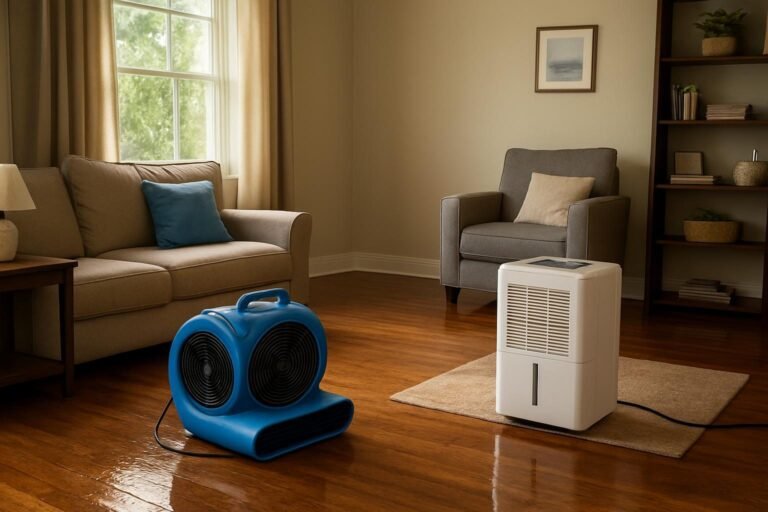
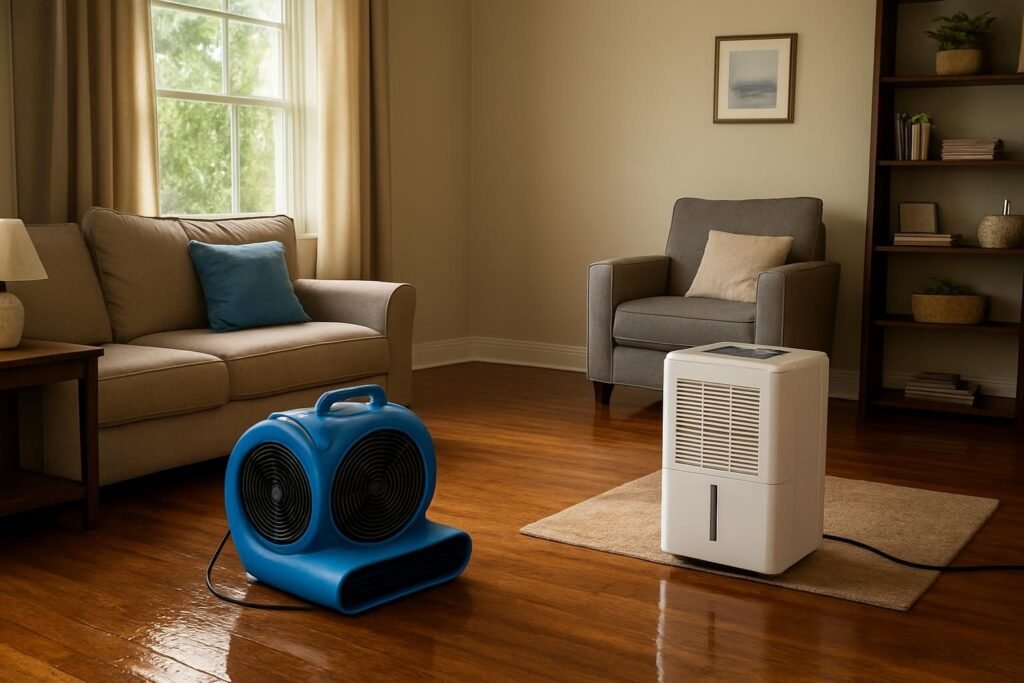
- Structural drying. Air movers and dehumidifiers run for several days. Desiccant dehumidifiers are sometimes used in very humid conditions.
- Monitoring. Technicians return to take daily moisture readings and adjust equipment until materials reach normal levels.
- Cleaning and sanitizing. Antimicrobial treatment, odor control and content cleaning, where appropriate.
Expect drying to take roughly three to five days for many residential jobs, longer for hardwood, plaster or deep wall cavities. Treat that as a general expectation, not a promise. Ask your contractor for the moisture readings that define “dry” before they pull equipment.
Humidity is the local wrinkle. A New Bern summer can hover well above comfortable indoor humidity levels, so dehumidification, not just airflow, does the heavy lifting. Our guide to New Bern weather by month shows how long that damp season lasts.
In river country, a wet house that isn’t drying within two days is already growing something you won’t like.
Mold: What to Expect and What to Do
Mold needs moisture, a food source and time. Wet drywall, wood framing and insulation provide all three, and eastern North Carolina’s climate keeps spores ready to grow. Visible growth or a musty smell can show up within a couple of days of an untreated leak.
What helps
- Get wet materials out or drying within 24 to 48 hours.
- Keep indoor humidity under control with dehumidifiers and your HVAC running.
- Cut out and bag moldy porous materials rather than painting over them.
- Fix the cause, not just the stain.
What to avoid
- Bleach alone on porous surfaces. It rarely reaches the roots in drywall or wood.
- Disturbing large moldy areas without containment. Spores spread to clean rooms.
- Sealing wet materials behind new paint or flooring.
Larger areas, hidden growth, or anyone in the home with asthma or a compromised immune system are good reasons to bring in a professional. Ask whether a firm offers containment, air scrubbers and post-remediation testing, and keep in mind that independent testing is separate from the company doing the work.
Many local problems start under the house rather than in it. If you notice damp insulation, sagging floors or musty odors, read our guide on crawl space moisture in eastern NC, and check whether pests are part of the picture: see termites in eastern North Carolina.

Insurance Documentation That Protects Your Claim
Good records are the difference between a smooth claim and a slow, argued one. Start your file the same day.
- Photos and video of damage, the source of water and the surrounding rooms, with timestamps.
- An inventory of damaged contents: item, age, approximate value, and receipts or photos if you have them.
- A timeline noting when you found the damage, who you called and when.
- Mitigation invoices. Emergency drying, tarps and extraction are typically reimbursable when you act to prevent further loss. Keep every receipt.
- Written estimates for repairs, plus the adjuster’s name and claim number on every document.
Know your policy’s limits before you need it. Standard homeowner policies generally cover sudden and accidental water events like a burst pipe, but usually exclude flood damage from rising water, and often exclude long-term seepage. Flood coverage is typically a separate policy through the National Flood Insurance Program or a private carrier, and wind-driven rain can be handled differently on coastal policies. Read your declarations page or ask your agent now, not after the loss.
The FEMA flood insurance page explains how NFIP coverage works. To understand your property’s risk, see our upcoming guide to flood zones in New Bern, and for broader costs, see the cost of living in New Bern, including insurance.
Mitigation receipts are money you can often recover. Throwing away the paperwork is the most expensive mistake homeowners make.
Typical Cost Ranges
Prices vary with square footage, water category, materials and how fast crews can start. These are rough, typical ranges for planning only. Get written estimates for your own situation.
| Scenario | Typical range (estimate) |
|---|---|
| Small clean-water leak, one room, quick response | A few hundred to roughly $2,500 |
| Burst pipe or appliance leak affecting several rooms | Roughly $2,500 to $8,000 |
| Gray-water event with carpet and drywall removal | Roughly $4,000 to $12,000 |
| Sewage or floodwater, whole floor or whole home | Roughly $10,000 to $30,000 or more |
| Mold remediation add-on, limited area | Roughly $1,500 to $6,000, higher for large or hidden growth |
These numbers often cover mitigation (drying and demolition) but not full rebuild. Flooring, drywall, paint, cabinets and trim are usually separate repair costs. Insurance may cover much of a sudden-event claim, minus your deductible. Storm-driven water often arrives with roof damage as well, so see roof replacement costs in New Bern and Craven County.
Choosing a Restoration Company in Craven County
After a storm, demand spikes and out-of-area crews and door knockers appear. Slow down enough to ask the right questions.
- Licensing and insurance. Ask for proof of general liability and workers’ compensation coverage, and check any required contractor licensing with the NC Licensing Board for General Contractors for larger rebuilds.
- Certifications. IICRC certification in water damage restoration is a common industry standard.
- Written scope and estimate. It should list rooms, equipment, materials to be removed and how drying will be verified.
- Insurance experience. A firm that routinely bills carriers can save you headaches, but you still choose the contractor.
- Local presence. Someone who can return in a day to check readings beats a crew gone after the first visit.
- No big upfront cash demands. Be cautious with anyone asking for full payment before work starts.
Many water events trace back to failing parts, so loop in the right trades. A plumber in New Bern fixes the cause, and a failed air handler or clogged condensate line can be the source, so see HVAC repair in New Bern. Owners of older properties should also read the historic home maintenance guide, since plaster, old pipes and original flooring dry and fail differently.
If you want a vetted local pro to look at your situation, use the form on this page to request water damage restoration help. You can browse more trades in our Local Pros directory and find related articles in Home & Property.
FAQ
How fast do I need to act after water damage?
Start within hours. Extraction and drying within 24 to 48 hours greatly reduce the chance of mold and structural damage, especially in New Bern’s humidity.
Does homeowners insurance cover water damage?
Often yes for sudden and accidental events like a burst pipe, but usually not for rising floodwater or long-term leaks. Flood coverage is generally a separate policy, so check your declarations page and call your agent.
How long does drying take?
Many residential jobs take around three to five days of equipment running, though hardwood floors, plaster and wet wall cavities can take longer. Your contractor should confirm dryness with moisture readings.
Can I dry the house myself?
For a very small, clean-water spill caught quickly, fans and a dehumidifier may be enough. Anything involving wet drywall, insulation, flooring or gray or black water calls for professional equipment and removal.
Is it safe to stay in the house?
Not if there is sewage or floodwater, electrical hazards, structural concerns or significant mold. When in doubt, stay elsewhere until a professional has checked the home.
Get Water Damage Help From a Vetted New Bern Pro
Tell us what happened and where, and a vetted local restoration pro will follow up to schedule an assessment.