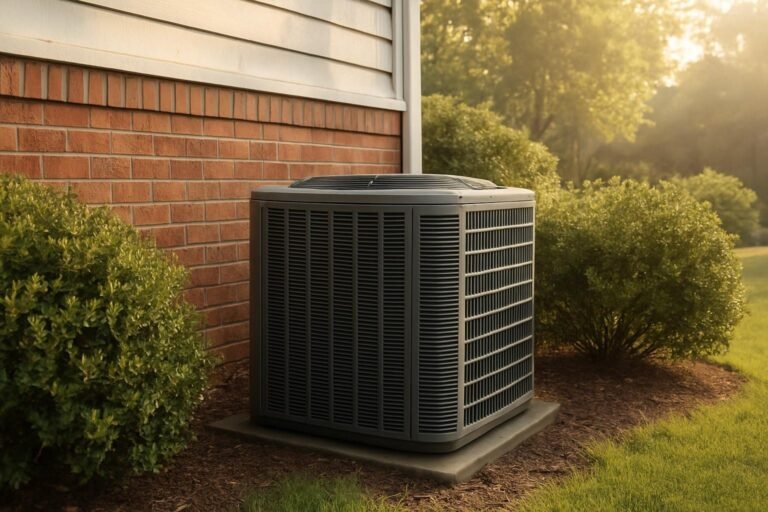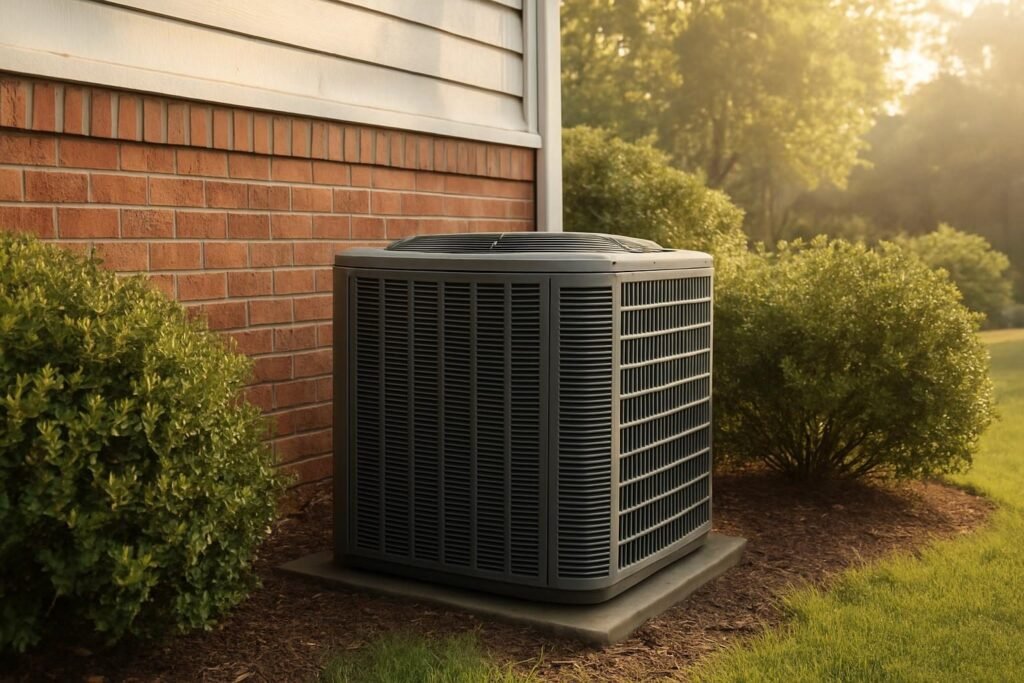
Quick answer: HVAC repair in New Bern, NC typically runs from roughly $100-$200 for a diagnostic visit up to $1,500 or more for major parts like a compressor. Most summer breakdowns here trace back to humidity-related problems: clogged condensate drains, frozen coils, failed capacitors and dirty outdoor units. Hire a licensed, insured contractor, get the problem explained in plain language, and ask for a written estimate before work begins.
Key takeaways
- Humidity, salt air and long cooling seasons make clogged drains, frozen coils and electrical failures the most common AC calls in Craven County.
- Small repairs (capacitor, contactor, drain line) usually cost far less than a new system; compressor and coil failures are where repair-vs-replace gets real.
- Always confirm a contractor’s NC license and insurance before letting anyone touch your system.
- A spring tune-up and regular filter changes prevent a large share of July breakdowns.
- Costs in this article are typical ranges, not quotes. Prices vary by company, equipment and season.
If you live in New Bern, Havelock, Trent Woods or anywhere along the Neuse and Trent, your air conditioner works harder than most. Summers are long, wet and sticky, and the system is not just cooling air but pulling gallons of water out of it. When something fails, it tends to fail on the hottest weekend of the year.
This guide covers what usually breaks, what repairs cost, when to repair versus replace, and how to hire well. If you want a vetted local pro to look at a problem now, request help with HVAC repair using the form on this page.
Why AC systems fail differently in New Bern
Eastern North Carolina is hard on cooling equipment. Our weather runs hot and humid for months (see New Bern weather by month for what to expect), and many homes sit close to water, where salty, moist air accelerates corrosion on outdoor coils and electrical connections.
Several local conditions stack the odds against your system:
- Constant moisture load. The system removes humidity all summer, so condensate drains and drain pans work almost nonstop.
- Pollen and debris. Spring pollen, oak leaves and pine needles clog filters and outdoor coils quickly.
- Older homes and ductwork. Historic-district houses and mid-century homes often have leaky or poorly insulated ducts, forcing equipment to run longer.
- Storm exposure. Power surges and flooding during tropical weather can damage compressors and control boards.
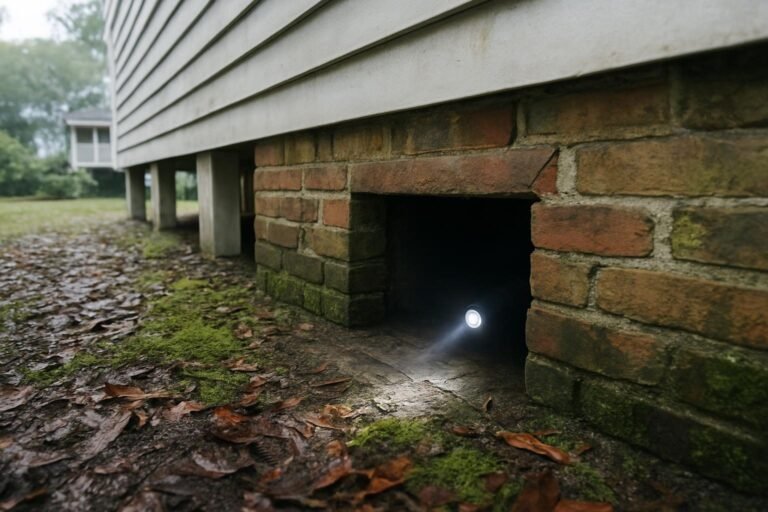
- Crawl space humidity. Ducts running through damp crawl spaces sweat and grow mildew. See our guide to crawl space moisture in eastern NC.
The most common humid-climate AC problems
Most service calls in this region fall into a handful of categories. Knowing them helps you describe the problem accurately and spot an inflated diagnosis.
Clogged condensate drain line
Algae and sludge build up in the drain that carries water away from the indoor coil. When it clogs, water backs up, trips a safety switch (shutting the system off) or overflows into the ceiling, closet or attic. It is one of the most common and most preventable failures in humid country.
Frozen evaporator coil
If you see ice on the refrigerant line or coil, or weak airflow followed by warm air, the coil may be frozen. Causes include a dirty filter, low airflow, a blower problem or low refrigerant. Turn the system off and let it thaw before calling; running it frozen can damage the compressor.
Failed capacitor or contactor
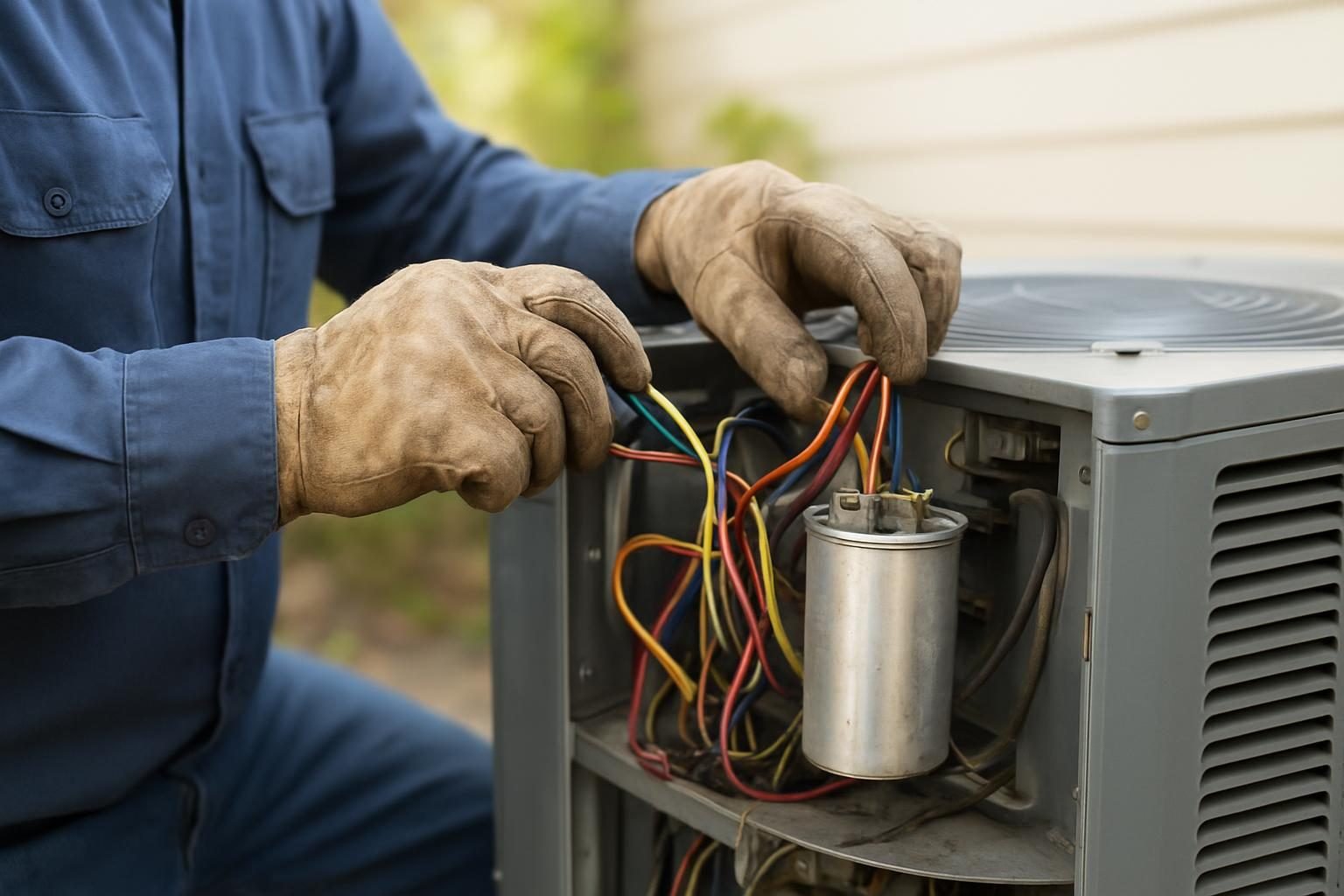
These small electrical parts help start the compressor and fan. Heat and humidity wear them out, and they are a very common reason an outdoor unit hums but will not run. They are usually among the cheaper repairs.
Refrigerant leaks
Refrigerant does not get “used up.” If the level is low, there is a leak somewhere. A reputable tech finds and addresses the leak rather than just topping off the system repeatedly.
Dirty or corroded outdoor coil
Pollen, grass clippings and salty air coat the condenser coil, reducing efficiency and raising operating temperatures. Homes near the water should pay extra attention here.
Thermostat and control board issues
Dead batteries, miswired smart thermostats and storm-damaged boards can mimic bigger problems. Check the thermostat settings and breaker before you call.
Local tip: Before calling for a no-cooling emergency, check the thermostat, the air filter and both breakers (indoor and outdoor units), and look for water near the indoor unit. Describing what you found saves diagnostic time.
HVAC repair costs in New Bern: typical ranges
Prices vary by company, the age of your equipment, parts availability and whether you call during a heat wave. The figures below are general estimates, not quotes. Always get a written estimate for your specific system.
| Repair | Typical range (estimate) | Notes |
|---|---|---|
| Diagnostic / service call | $100-$200 | Often credited toward repair if you proceed |
| Clearing a condensate drain | $100-$300 | Cheaper if caught before water damage |
| Capacitor replacement | $150-$450 | Common, quick fix |
| Contactor or relay | $150-$400 | Often paired with capacitor issues |
| Fan motor (condenser or blower) | $400-$1,200 | Varies by motor type |
| Refrigerant leak repair and recharge | $300-$1,500+ | Depends on leak location and refrigerant type |
| Evaporator coil replacement | $1,000-$2,500+ | Labor-heavy |
| Compressor replacement | $1,500-$3,500+ | Often a repair-vs-replace decision |
After-hours and weekend calls usually carry a premium. If the situation is not an emergency (no one in the home is vulnerable to heat), waiting for regular hours can lower the bill.
Most summer AC failures here come from small, humidity-driven parts, not the big expensive components.
Repair or replace: how to decide
The question comes up most when the compressor or coil fails, or when a system is 12-15 years old and repairs keep stacking up. A few guidelines help cut through the sales pitch.
Signs repair makes sense
- The system is under about 10 years old.
- The failed part is inexpensive (capacitor, contactor, drain, thermostat).
- The unit has been reliable and well maintained.
- The part may still be covered by a manufacturer or installer warranty. Ask.
Signs replacement deserves a serious look
- The system is 12-15 years old or more.
- The repair costs a large share of a new system’s price.
- You have had multiple repairs in a short span.
- The system uses an older refrigerant that is costly and increasingly scarce.
- Your energy bills have crept up and rooms are uneven.
A common rule of thumb: if a repair costs roughly half or more of a replacement, or the system is near the end of its typical lifespan, compare quotes for new equipment before spending big on the old one. Ask for a repair quote and a replacement quote side by side.
Also ask whether the ductwork needs attention. A new, correctly sized unit on leaky, wet or undersized ducts will still underperform, particularly in older homes. Our guide to older home maintenance in New Bern covers common issues in historic houses.
How to hire an HVAC contractor in Craven County
HVAC work is regulated in North Carolina, and that works in your favor. The state licenses heating and cooling contractors, and you can check a license before you hire. The North Carolina State Licensing Board for Contractors and the NC Board of Examiners of Plumbing, Heating and Fire Sprinkler Contractors are the official sources to verify credentials; confirm which applies to the work being done.
Use this checklist before you say yes:
- Verify the license. Ask for the license number and check it with the state board.
- Confirm insurance. Ask for proof of liability and workers’ compensation coverage.
- Get the diagnosis in plain language. A good tech shows you the failed part or readings and explains why.
- Ask for a written estimate that separates parts, labor and any trip or diagnostic fee.
- Ask about warranties on both parts and labor.
- Get a second opinion for any repair over about $1,000 or any replacement recommendation.
- Ask about timing and parts. Is the part in stock, or does it need ordering?
Be cautious of anyone who pressures you to decide on the spot, quotes a replacement without inspecting ductwork, or declines to put numbers in writing. Another red flag is a quote far below everyone else’s, which can signal cut corners or surprise add-ons later.
A fair contractor shows you the problem, explains the options and puts the price in writing before touching anything.
Maintenance that prevents summer breakdowns
A little upkeep goes a long way in humid river country. Most of it costs little or nothing.
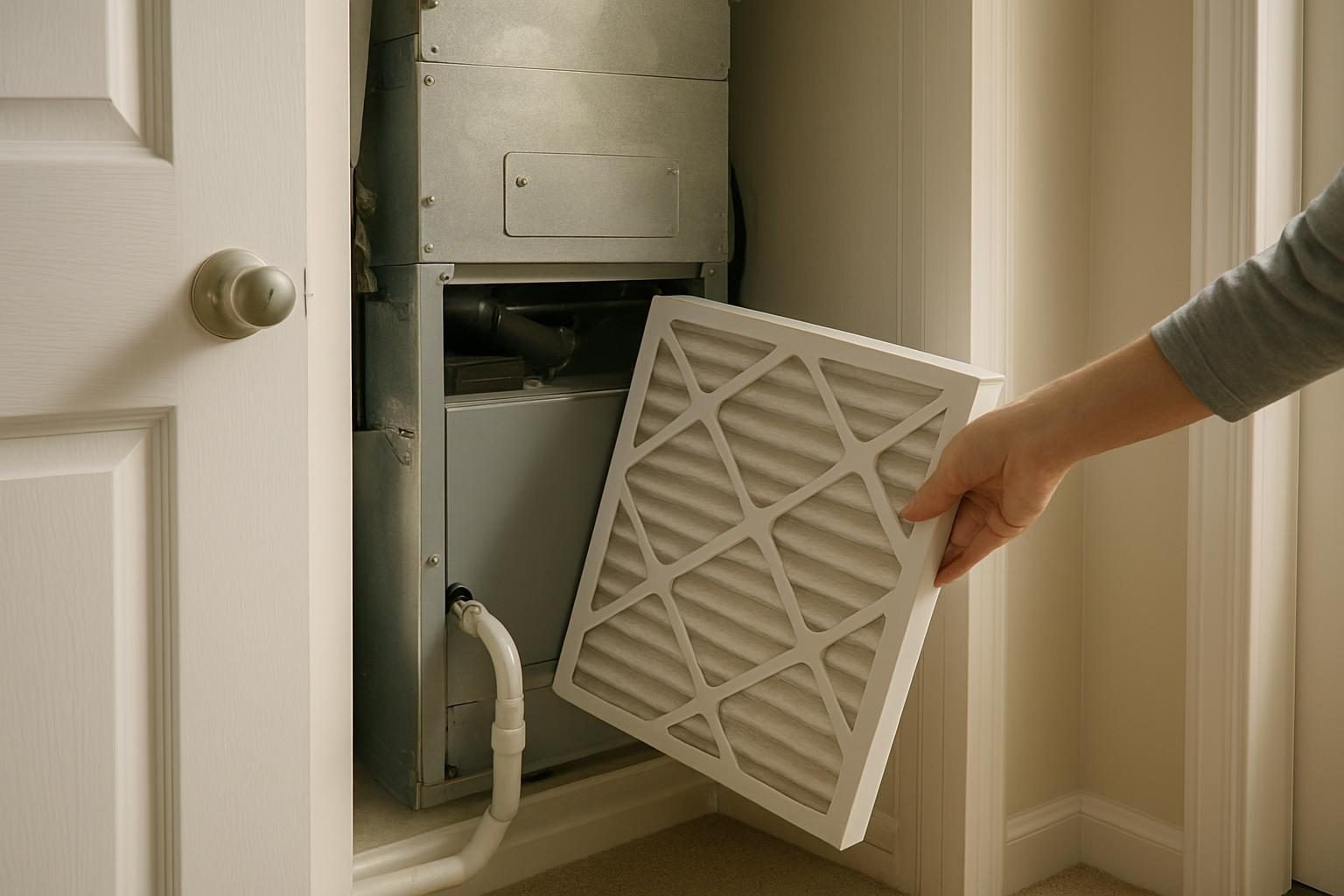
- Change filters regularly. Check monthly in peak season; many homes need a new one every 1-3 months, sooner with pets or heavy pollen.
- Schedule a spring tune-up. Have a pro check refrigerant, electrical components, coils and the condensate drain before the heat arrives.
- Keep the outdoor unit clear. Trim plants back a couple of feet, and gently rinse off pollen and grass clippings.
- Flush or treat the drain line. Ask your tech about a routine cleaning or a float switch that shuts the system off before water overflows.
- Watch your humidity. Indoor humidity that stays high even while the AC runs can point to oversizing, duct leaks or crawl space moisture.
- Prep for storms. A surge protector for the outdoor unit and a plan for shutting power down ahead of a hurricane help. Our hurricane prep checklist for New Bern homes and hurricane season guide cover the rest.
If your system sat in floodwater, do not turn it on. Have a licensed pro inspect it first, and see our upcoming after-flood home checklist.
Moving here or new to the house?
Newcomers, including military families arriving from Cherry Point, often inherit a system with an unknown history. Ask the seller or landlord for service records, note the age on the unit’s data plate, and consider a pre-season inspection. Budgeting for cooling is part of the picture in our cost of living in New Bern guide, and the complete moving guide covers more of what to expect. For more home upkeep help, browse our Home & Property hub and the Local Pros directory.
Ready to get a system looked at? Request help with HVAC repair from a vetted local pro using the form on this page.
FAQ
How much does HVAC repair cost in New Bern, NC?
As a typical range, a diagnostic visit runs about $100-$200, small repairs like a capacitor or drain cleaning often fall between $100 and $450, and major repairs like a compressor can exceed $1,500. Get a written estimate for your own system.
Why does my AC keep freezing up in summer?
Common causes are a dirty filter, restricted airflow, a failing blower or low refrigerant from a leak. Turn the system off to thaw it, replace the filter, and call a pro if it happens again.
Is it worth repairing a 15-year-old air conditioner?
Often not for major repairs. If the fix is costly and the system is near the end of its typical lifespan, compare a replacement quote. Small repairs can still be worthwhile for a few more seasons.
How often should I service my HVAC system here?
Once a year is a good baseline, ideally in spring before cooling season. Heat pumps that run year-round may benefit from a check in both spring and fall.
How do I check if an HVAC contractor is licensed in North Carolina?
Ask for the license number and verify it with the relevant North Carolina licensing board. Also request proof of insurance before work starts.
Need a hand with a failing system? Use the form on this page to request HVAC repair help from a vetted local pro.
Need AC repair in New Bern? Get matched with a vetted local pro
Tell us what your system is doing and we’ll pass your request to a vetted local HVAC pro, who will follow up to schedule a visit.