Quick answer: A whole house generator in New Bern typically runs about $9,000 to $22,000 installed, depending on size, fuel type and how much electrical work your panel needs. Most homes here land on a 14 to 24 kW standby unit running on natural gas or propane. Get the permit, the placement and the transfer switch right and it will carry you through a Florence-style outage.
Key takeaways
- Typical installed cost is roughly $9,000 to $22,000; larger homes and difficult sites cost more.
- Sizing depends on your loads, especially central air, a well pump and any electric water heater.
- Placement matters as much as price in flood-prone areas along the Neuse and Trent.
- Plan on a yearly service visit and a monthly self-test.
If you have sat through a multi-day outage after a hurricane, you already know why people here buy these. Power can stay off for days, and in August that means no air conditioning, a warm refrigerator and a sump or well pump that stops. This guide covers what a whole house generator in New Bern really involves, with honest ranges you can use to check quotes.
Ready to compare bids? Request help with generator installation from a vetted local pro using the form on this page.
What a whole house generator is (and is not)
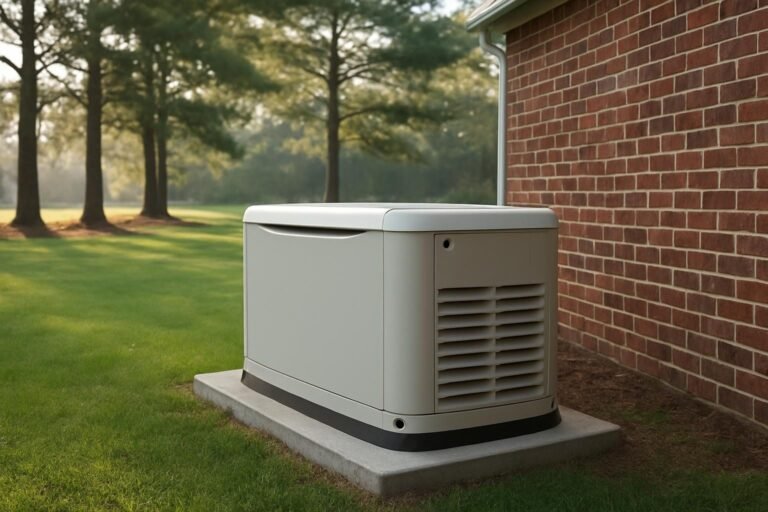
A whole house, or standby, generator is a permanent unit that sits outside on a pad and connects to your home’s gas supply and electrical panel. When utility power fails, an automatic transfer switch starts the generator within seconds and moves your home onto it. When power returns, it switches back and shuts down.
That is different from a portable generator you wheel out and plug into extension cords. Portables are cheaper but need fuel hauling, constant attention and careful placement to avoid carbon monoxide hazards.
- Standby (whole house): automatic, runs on natural gas or propane, permanent install.
- Portable with inlet: manual start, gasoline or propane, hooked in through an interlock or inlet box.
- Partial-home standby: a smaller unit wired only to essential circuits.
Typical cost ranges in New Bern
These are typical estimates, not quotes. Prices shift with equipment, labor, gas line distance and permit requirements, so get at least two written bids.
| Generator size | Typical use | Estimated installed cost |
|---|---|---|
| 10 to 14 kW | Smaller homes, essential circuits, one A/C unit | $8,000 to $13,000 |
| 16 to 22 kW | Average 1,800 to 3,000 sq ft home, central air | $11,000 to $18,000 |
| 24 to 26 kW | Larger homes, two A/C units, well pump | $14,000 to $22,000 |
| 30 kW and up | Large estates, heavy loads | $20,000 and up |
What drives the price up
- A long gas line run from the meter to the pad.
- A panel upgrade or a second transfer switch for two HVAC systems.
- Elevating the pad or adding mounting hardware in a flood-prone yard.
- Trenching through tree roots, driveways or patios.
- Propane tank installation if you have no natural gas service.
Sizing: how big a generator do you need?
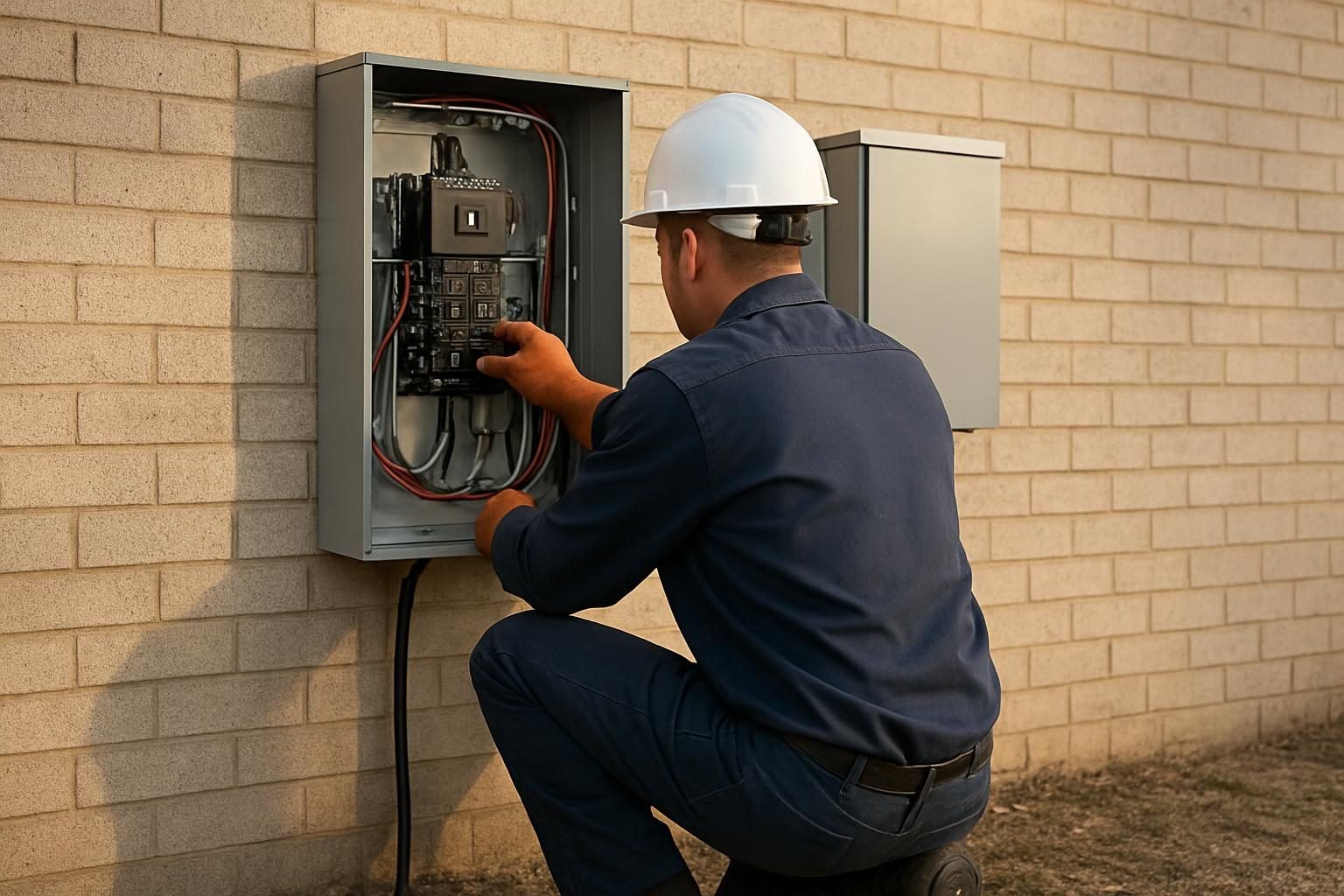
Sizing is about what you want running at the same time, not square footage alone. A reputable installer will do a load calculation instead of guessing. The biggest draws are almost always the same.
- Central air conditioning: often the largest load in a humid river-country summer. A 3- to 4-ton system may need a unit with soft-start hardware.
- Well pump: common out toward Vanceboro, Dover and rural Craven County.
- Electric water heater, range and dryer: big loads you can load-shed or exclude.
- Refrigerators, freezers, lights, internet and a medical device: small but essential.
If your budget is tight, ask about a load management module. It lets a smaller generator run a larger house by cycling big appliances instead of running them all at once.
Local tip: Count your A/C tonnage before you call anyone. Two older systems can push you up a full size class, and knowing the numbers helps you spot a bid that undersizes the unit.
Natural gas vs. propane
Your fuel choice shapes the cost, the runtime and how you prepare for storms.
| Factor | Natural gas | Propane |
|---|---|---|
| Supply | Continuous from the utility line | Limited to your tank size |
| Availability | Only where service reaches your street | Works almost anywhere |
| Upfront cost | Lower if the line is already there | Adds tank and installation cost |
| Storm risk | Gas mains can be disrupted in a severe event | Tank fills depend on delivery during storm season |
Natural gas is convenient inside town limits where service is available. Propane is the practical answer for many outlying properties, but a larger tank buys more runtime, so ask how many days a full tank would carry your load.
The right generator is the one sized to your real loads and placed where floodwater and wind cannot reach it.
Permits, codes and inspections
A standby generator is a permanent electrical and gas installation, so expect permits. Requirements are set by your local jurisdiction, such as the City of New Bern, Havelock or Craven County, and they can differ depending on where you live. Confirm the current rules with the local permitting office before work begins.
- Electrical permit for the transfer switch and panel connection.
- Gas or mechanical permit for the fuel line, and a propane tank permit where applicable.
- Inspection after installation, often before the unit is put into service.
- HOA or architectural approval if your neighborhood has covenants, which is common in communities like Fairfield Harbour or River Bend.
Use a licensed electrician and a licensed gas fitter. Unpermitted work can complicate insurance claims and a future home sale. Our Fairfield Harbour guide touches on how planned communities handle exterior changes.
Placement near rivers, flood zones and trees
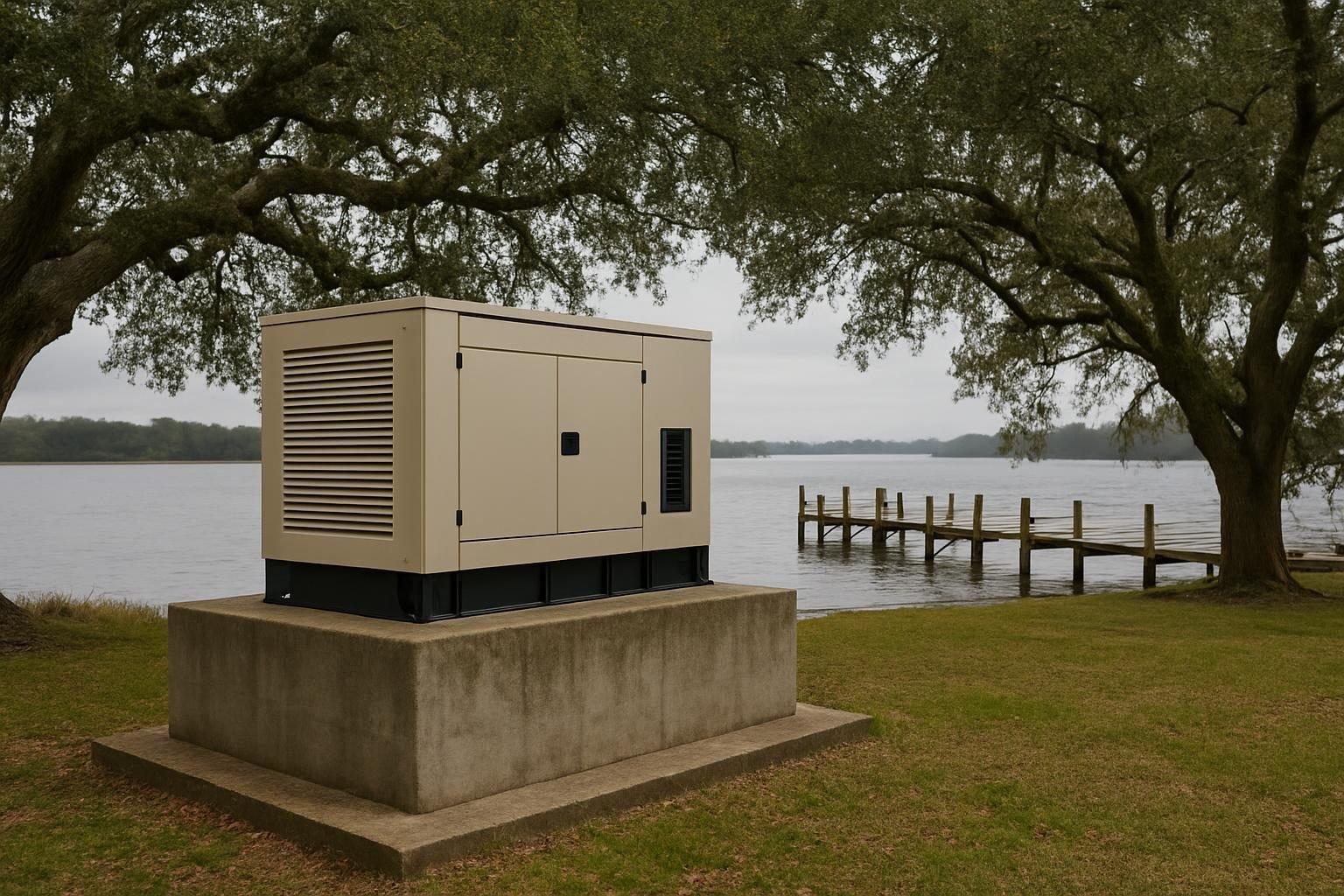
This is where Craven County differs from many other places. Parts of New Bern, Trent Woods, Brices Creek and James City sit low, and Florence showed how fast water can come up. A generator submerged in floodwater is a total loss.
- Check your flood zone first. Our guide to flood zones in New Bern explains how to look up your property.
- Elevate the pad above the expected flood level where codes and your site allow it.
- Keep clearance from windows, doors and vents, per the manufacturer and local code, so exhaust stays out of the house.
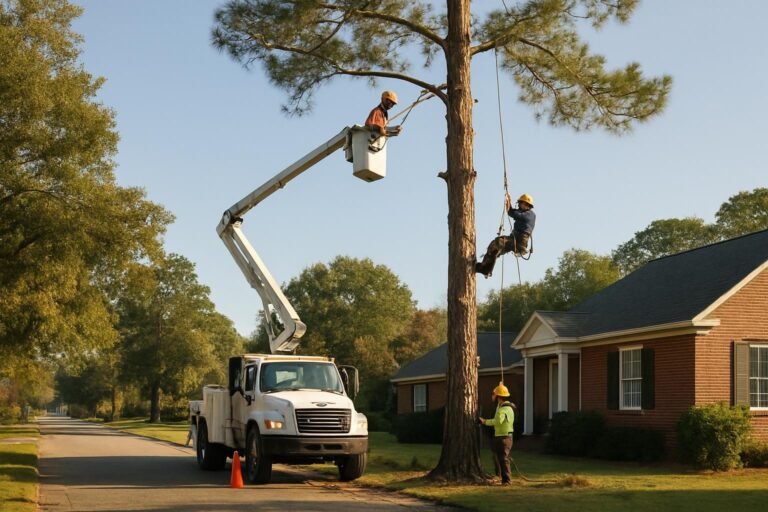
- Mind the trees. Live oaks and pines drop limbs in storms. See tree removal in New Bern before you pick a spot.
- Plan for corrosion. Salt air and humidity are hard on metal; ask about enclosure finishes suited to coastal conditions.
Your installer should walk the property and explain why the pad goes where it does, not just pick the easiest spot beside the meter.
Maintenance and what it costs to keep running
A standby generator that has never been tested may not start when you need it. Treat it like a small engine that sits for months at a time.
- Weekly or monthly self-test: most units run a short automatic exercise cycle. Confirm it is set.
- Annual service: oil and filter, spark plugs, air filter, battery check and a load test. Service visits commonly cost a few hundred dollars, so check current pricing.
- Battery replacement: every few years, and before hurricane season.
- Keep the area clear: trim vegetation, watch for wasp nests and fire ants, and keep mulch away from vents.
Many installers offer maintenance plans. Ask whether the price includes emergency callouts during storm season, which is when everyone calls at once.
A generator that has never been exercised is a gamble; a serviced one is the closest thing to a guarantee.
Choosing an installer and getting bids
The generator itself is only part of the job. The quality of the wiring, gas work and permitting decides how well it performs for the next decade.
- Get at least two or three written, itemized quotes.
- Ask for the equipment brand, model and kW rating in writing.
- Confirm licensing for both electrical and gas work, and ask for proof of insurance.
- Ask who pulls the permits and who schedules the inspection.
- Ask about warranty terms for the equipment and for the labor.
Making it part of your storm plan
A generator helps, but it does not replace a plan. Pair it with a hurricane kit, a fuel strategy and an evacuation decision. Our hurricane prep checklist for New Bern homes and hurricane season guide cover the rest of the picture.
Ask your insurer whether a generator affects your premium, and check your policy language on storm damage. For broader household budgeting, see the cost of living in New Bern. If your A/C struggles on a normal day, resolve that first with HVAC repair in New Bern, since it affects your generator sizing.
For more on keeping up a house in this climate, browse our Home & Property section and the Local Pros directory. For storm preparedness basics, the Ready.gov power outage guidance is a solid reference.
When you are ready, request generator installation help from a vetted local pro using the form on this page.
FAQ
How much does a whole house generator cost in New Bern?
Typical installed prices run from about $9,000 to $22,000, depending on size, fuel, panel work and site conditions. Larger homes and tricky sites can cost more. Treat this as an estimate and get written quotes.
Do I need a permit to install a standby generator?
Usually yes. Expect electrical and gas permits plus an inspection, and possibly HOA approval. Confirm current requirements with your local permitting office before work starts.
Is natural gas or propane better for a generator here?
Natural gas is convenient where service is available. Propane suits properties without gas lines, but runtime is limited by tank size. Your installer can estimate how many days a given tank would last.
Can I put a generator in a flood zone?
It can be done, but the pad usually needs to be elevated and placed carefully. Check your flood zone, follow local code and manufacturer clearance rules, and ask your installer how they handle flood-prone yards.
How often does a standby generator need service?
Plan on a professional service once a year, plus an automatic or manual test run regularly. Have it checked before hurricane season starts.
Get a generator installation quote in New Bern
We pass your request to a vetted local pro who will contact you to discuss sizing, fuel and a written estimate.